Technical Portrait 041
Brenda Milner
The scientist who helped reveal that memory is not one thing.
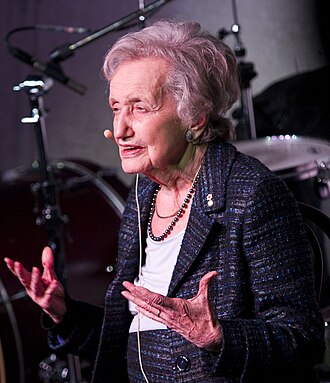
Brenda Milner helped create modern cognitive neuroscience by studying what injury and surgery could reveal about memory. Her work with patient H.M. showed that the hippocampal region was essential for forming new long-term memories while other kinds of learning could remain intact. That insight changed psychology, neurology, and the way scientists talk about the mind.
The Canadian Identity
Her Canadian identity is Montreal scientific identity. Milner joined McGill and the Montreal Neurological Institute and built a career that stretched across more than seven decades. The same Canadian medical ecosystem that shaped Penfield also gave Milner the setting for a different kind of brain science: less surgical theatre, more careful testing, long observation, and conceptual clarity.
The Achievement
Milner's work made memory plural. Skills, facts, events, language, spatial learning - these could be separated, damaged, studied, and understood. That changed clinical practice and experimental psychology. It also made patients central to discovery without reducing them to case numbers.
The Legacy
Her profile belongs in this collection because she shows Canada as a home for patient, cumulative science. Milner did not become important through one media-friendly breakthrough. She became important by asking precise questions for a lifetime and building a body of work that still structures how memory is taught.
Operational Timeline
Born in Manchester, England
Born in Manchester, England.
Moves to Canada and begins graduate work connected to McGill
Moves to Canada and begins graduate work connected to McGill.
Studies patient H
Studies patient H.M., transforming the science of memory.
Continues building clinical neuropsychology at The Neuro
Continues building clinical neuropsychology at The Neuro.
Receives the Kavli Prize in Neuroscience
Receives the Kavli Prize in Neuroscience.
Recognized as one of Canada's most influential living scientists
Recognized as one of Canada's most influential living scientists.