Space & Science 014
Chris Hadfield
Commander of the ISS. The astronaut who brought the wonders of orbital science down to Earth through a guitar, a lens, and a relentless commitment to curiosity.
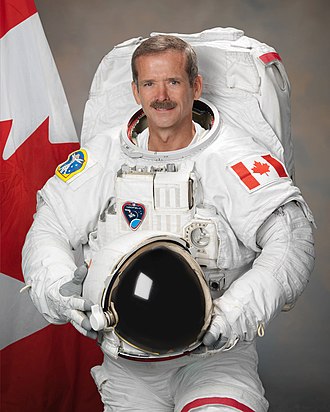
Chris Hadfield did not just fly in space; he occupied it with a degree of grace and competence that has made him one of the most recognizable astronauts in history. Long before he was a global social media phenomenon, he was a dedicated officer in the Royal Canadian Air Force, serving as a fighter pilot and a top-tier test pilot. His "primary power" was tactical composure—the uncanny ability to maintain absolute focus and emotional steady-state while traveling at 28,000 kilometres per hour. Whether he was fixing a leaking ammonia line during an emergency spacewalk or commanding the International Space Station, Hadfield’s approach was rooted in the philosophy that preparation is the only true antidote to fear.
During Expedition 35, Hadfield fundamentally changed the paradigm of how the public perceives space exploration. Through simple, direct demonstrations—showing how to brush teeth in microgravity, what happens when you wring out a wet towel, or the eerie beauty of an orbital sunrise—he demystified the extreme environment of Low Earth Orbit. He realized that the greatest barrier to scientific progress was not the vacuum of space, but a lack of shared wonder. By bridging the gap between the complex mechanics of orbital science and the lived experience of humanity, he inspired a new generation of scientists, engineers, and dreamers to look upward with renewed purpose.
The Early Trajectory
Born on August 29, 1959, in Sarnia, Ontario, and raised on a corn farm in Milton, Chris Hadfield’s life was altered forever on the evening of July 20, 1969. Sitting with his family in front of a grainy black-and-white television, he watched as Neil Armstrong and Buzz Aldrin stepped onto the lunar surface. For the nine-year-old Hadfield, this wasn't just a historic event; it was a career path. Despite there being no Canadian space program at the time, he decided that night that he would become an astronaut. Every decision he made from that point forward—joining the Royal Canadian Air Cadets, learning to fly gliders at age 15, and pursuing a degree in mechanical engineering—was a calculated step toward the stars.
His education at the Royal Military College (RMC) in Kingston was the crucible where his discipline and technical acumen were forged. Graduating in 1982, he entered the Royal Canadian Air Force (RCAF) and quickly distinguished himself as one of the most capable pilots in the service. In the mid-1980s, during the height of the Cold War, he flew CF-18 Hornet fighters for NORAD, conducting several intercepts of Soviet "Bear" bombers off the coast of Canada. These high-stakes encounters required nerves of steel and a level of precision that would later define his astronaut career. He eventually became a test pilot, graduating top of his class from the U.S. Air Force Test Pilot School, where he tested over 70 types of aircraft and pushed the boundaries of aviation technology.
In 1992, the opportunity he had spent twenty years preparing for finally arrived. The Canadian Space Agency announced a search for its second group of astronauts. Out of over 5,000 applicants, Hadfield was one of four selected. His transition from the cockpit of a fighter jet to the simulators of NASA was seamless, driven by his relentless curiosity and his "square astronaut, round hole" philosophy of adaptability. He wasn't just a pilot anymore; he was a scientist, an engineer, and an ambassador for a nation that was punching far above its weight in the global space race.
The Orbital Command
Hadfield's astronaut career was defined by three historic missions, each one pushing the boundaries of what a Canadian could achieve in space. His first flight, STS-74 in 1995, saw him become the first Canadian to operate the Canadarm in orbit. The mission's primary objective was to dock the Space Shuttle *Atlantis* with the Russian space station *Mir*, a complex maneuver that required millimeter-precision. Hadfield was the only Canadian to ever board the *Mir*, a feat that symbolized the end of the Cold War and the beginning of a new era of international cooperation in space.
His second mission, STS-100 in 2001, was even more ambitious. Flying on the Space Shuttle *Endeavour*, Hadfield became the first Canadian to perform a spacewalk (Extravehicular Activity or EVA). He spent nearly 15 hours outside the International Space Station, helping to install the Canadarm2, the massive robotic arm that remains a cornerstone of ISS operations. During the EVA, he faced a life-threatening emergency when a drop of anti-fog solution got into his eye, causing it to tear up and temporarily blinding him. In the vacuum of space, tears don't fall; they form a growing ball of liquid that can eventually drown an astronaut. With characteristic composure, Hadfield managed to vent some of his oxygen to clear the moisture, completing the task while his crewmates watched in awe.
The pinnacle of his career came in 2012-2013 during Expedition 34 and 35. Launched via a Russian Soyuz spacecraft, Hadfield spent 166 days in orbit, eventually assuming command of the ISS in March 2013. He was the first Canadian to hold this position, overseeing a multinational crew of astronauts and cosmonauts. Under his leadership, the station conducted over 130 scientific experiments, ranging from medical research to physics. His command was not just about technical management; it was about fostering a culture of excellence and shared responsibility. He famously remarked that "an astronaut is someone who's able to make good decisions quickly, with incomplete information, when the consequences of those decisions matter."
The Orbital Ambassador
What truly set Hadfield apart during his time on the ISS was his commitment to public engagement. He understood that while the science was vital, the human story of space exploration was what would ultimately sustain it. Armed with a high-definition camera and a guitar, he began sharing his daily life with millions of people on Earth via Twitter, Facebook, and YouTube. He showed the world how astronauts sleep, how they eat, and how they deal with the mundane challenges of weightlessness. His videos, delivered with a mix of wonder and deadpan Canadian humor, transformed him from a technical expert into a global celebrity.
The culmination of this effort was his performance of David Bowie’s "Space Oddity." Recorded in the station's Cupola—a 360-degree window overlooking the Earth—the music video captured the haunting beauty of our planet in a way that no photograph could. It was the first music video ever made in space, and it resonated with people across cultures and generations. When David Bowie himself called the version "possibly the most poignant version of the song ever created," it solidified Hadfield’s role as the world's preeminent orbital ambassador. He wasn't just representing Canada; he was representing the human spirit’s innate desire to explore and create, even in the most hostile environments.
His return to Earth on May 13, 2013, did not mark the end of his mission. Hadfield transitioned into a "Living Legacy" role, becoming one of the world's most effective science communicators and authors. His book, *An Astronaut's Guide to Life on Earth*, became a global bestseller, offering lessons on leadership, preparation, and the importance of "aiming to be a zero"—the idea that you should first aim to not be a burden to your team before you aim to be a hero. He continues to advocate for the Artemis program and the Lunar Gateway, ensuring that Canada's expertise in space robotics and orbital mechanics remains at the center of the next great leap into the solar system.
Notable Quotes
"An astronaut is someone who's able to make good decisions quickly, with incomplete information, when the consequences of those decisions matter."
— Chris Hadfield
"The more you know, the less you fear."
— Chris Hadfield
"Square astronaut, round hole. It’s not just a puzzle; it’s a way of life."
— Chris Hadfield
"Aim to be a zero. If you walk into a room and you’re a plus-one, you’re adding value. If you’re a minus-one, you’re a burden. But if you’re a zero, you’re competent and reliable, and you’re ready to become a plus-one when the time is right."
— Chris Hadfield
Mission Log
Origin
Born in Sarnia, Ontario. Raised on a corn farm in Milton, where he first dreamed of the stars.
Lunar Spark
Watches the Apollo 11 moon landing. Decides that night to become an astronaut, despite there being no Canadian space program.
Wings of Command
Enlists in the Royal Canadian Air Force. Begins a decade-long career as a fighter pilot and test pilot.
The Selection
Selected by the Canadian Space Agency as one of four new astronauts from over 5,000 applicants.
STS-74
Flies as the first Canadian to operate the Canadarm in orbit, docking with the Russian Mir space station.
STS-100
Becomes the first Canadian to perform a spacewalk, spending nearly 15 hours outside the ISS to install Canadarm2.
ISS Command
Assumes command of the ISS, overseeing a massive scientific program and captivating a global audience with social media.
Space Oddity
Releases a cover of David Bowie's song recorded on the ISS, becoming the first music video ever made in space.
Space Sessions
Releases "Space Sessions: Songs from a Tin Can," the first album recorded at least partially in orbital space.
The Apollo Murders
Publishes his debut novel, a Cold War space thriller that becomes an international bestseller.
Artemis Advisor
Leading strategic discussions on the integration of AI and robotics for the upcoming lunar surface missions.