Technical Portrait 020
Clara Hughes
A force of nature on both the track and the ice, whose greatest victory was breaking the silence around mental illness and redefining the limits of the human engine.
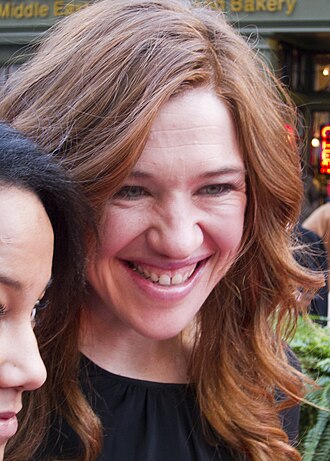
The Olympic Games demand a singular, consuming dedication to a specific discipline. To reach the pinnacle of a sport once is the achievement of a lifetime. To do it in two radically different sports—one on asphalt in the blistering summer heat, the other on ice in the depths of winter—is almost beyond comprehension. Clara Hughes accomplished precisely this, cementing her place as one of the most versatile and resilient athletes in history. Her "primary power" is not just physiological endurance, but a mental fortitude that allows her to pivot between worlds that most athletes would find irreconcilable.
Born in Winnipeg, Manitoba, Hughes' path to glory was not a pristine narrative of childhood prodigy. Her teenage years were turbulent, marked by smoking, drinking, and skipping school. She was, by her own admission, a "delinquent," a young woman adrift in a sea of poor choices. It was only after watching speed skater Gaétan Boucher at the 1988 Calgary Olympics on television that she found her anchor. That moment of televised inspiration sparked a transformation that would take her from the streets of Winnipeg to the podiums of Atlanta, Salt Lake City, Turin, and Vancouver. She didn't just find a sport; she found a reason to endure.
The Early Life
Clara Hughes was born on September 27, 1972, in the North End of Winnipeg, a community known for its grit and resilience. Her upbringing was fraught with the kinds of challenges that often derail promising lives. Her father struggled with alcoholism, and her home life was frequently unstable. By the age of 16, Clara was a habitual smoker, a heavy drinker, and a frequent runaway. She was a student at Elmwood High School, but her true education was happening on the margins of society. The turning point came during the Winter Olympics in Calgary, when the sight of Gaétan Boucher’s powerful strides on the ice recalibrated her internal compass. She saw in him a version of herself that didn't yet exist: disciplined, powerful, and focused.
Determined to change, she joined a local speed skating club and began the grueling process of purging her system of the habits that had defined her. Her ascent was rapid; within two years, she was a member of the national junior team. However, the financial and seasonal constraints of speed skating led her to discover a second passion: cycling. She found that the immense power generated in her legs for skating translated perfectly to the pedals. She pursued both with a ferocity that bordered on the obsessive, eventually earning a degree in Visual Arts from the University of Calgary, balancing her artistic sensibilities with the raw physicality of elite competition. This dual focus—the creative and the competitive—would become a hallmark of her complex public persona.
Her transition to competitive cycling in 1990 was more than just a cross-training exercise; it was the birth of a second elite career. She moved to Hamilton, Ontario, to train with the national cycling team, quickly becoming the top female road cyclist in the country. Her "Super" ability was her aerobic capacity—the "engine" that allowed her to sustain high-intensity efforts for hours on end. This physical gift, combined with a willingness to embrace the "suffering" of the road, made her a formidable competitor on the international stage. Yet, even as she was winning medals, she was beginning to realize that the internal shadows of her youth were not so easily outrun.
The Work & Achievements
Clara Hughes’ athletic statistics defy logic and historical precedent. At the 1996 Summer Olympics in Atlanta, she became the first Canadian woman to win an Olympic medal in road cycling, taking bronze in both the individual road race and the individual time trial. These were not just athletic victories; they were proof that her transformation from a troubled teen to an Olympic champion was complete. However, the pressure of maintaining that level of performance led to a period of intense burnout and depression. After a disappointing performance at the 2000 Sydney Games, she made the radical decision to return to her first love: long-track speed skating. Most experts thought the transition back to the ice after a decade away was impossible. They were wrong.
In 2002, only sixteen months after putting her skates back on, Hughes won a bronze medal in the 5000m at the Salt Lake City Winter Olympics. This feat made her only the fourth person, and the second woman, to win medals in both the Summer and Winter Games. She wasn't finished. At the 2006 Winter Olympics in Turin, she reached the absolute summit, winning gold in the 5000m and silver in the team pursuit. In a move that defined her humanitarian "Super" status, she donated $10,000 of her personal savings—the amount she believed a gold medal bonus should be—to Right To Play, an organization that uses sport to empower children in disadvantaged areas. This act of selfless generosity inspired Canadians to donate over $500,000 to the cause within days.
Her physical engine was matched only by her tactical intelligence. Whether grinding up a mountain stage on a bicycle or executing the precise, punishing crossovers of a long-track speed skating race, Hughes demonstrated a superhuman capacity to endure and thrive in the face of excruciating physical pain. She concluded her skating career at the 2010 Vancouver Winter Olympics, where she was chosen as Canada’s flag bearer for the opening ceremony—a moment of profound national recognition. She capped off the games with a bronze medal in her signature 5000m event. Even then, she wasn't done with the road; she returned to cycling for the 2012 London Summer Olympics, finishing fifth in the time trial at the age of 39, competing against athletes half her age.
The Courage to Speak
Yet, while she was conquering the physical world, Hughes was fighting a profound, hidden battle with severe clinical depression. At the height of her success, she was frequently engulfed by a darkness that threatened to destroy her. She struggled with the "post-Olympic blues" that often hit elite athletes, but for her, the condition was deeper and more chronic. Her most courageous act was not winning Olympic gold, but choosing to speak publicly about her struggles at a time when mental illness in elite sports was heavily stigmatized. By sharing her story, she stripped away the myth of the "invulnerable athlete" and replaced it with a more human, more relatable truth.
In 2011, Hughes became the national spokesperson for the Bell Let’s Talk campaign, a role she used to normalize conversations about mental health across the country. She understood that silence was the greatest ally of mental illness, and she used her immense platform to break it. In 2014, she undertook "Clara's Big Ride," an epic 110-day, 12,000-kilometre bicycle journey that touched 95 communities across Canada. The ride was a physical manifestation of her advocacy, a way to connect with Canadians in their own towns and cities and let them know they weren't alone. Clara Hughes proved that true strength isn't the absence of vulnerability, but the courage to confront it in the open.
The Legacy of Motion
Clara Hughes’ legacy is one of integrated excellence. She is an Officer of the Order of Canada, a member of the Order of Manitoba, and has been inducted into both Canada’s Sports Hall of Fame and Canada’s Walk of Fame. Her autobiography, Open Heart, Open Mind, became a national bestseller and a cornerstone of mental health literature in Canada. She has shown that it is possible to be a world-class competitor while maintaining a deep commitment to humanitarianism and self-care. Her "Super" classification is defined by this balance: she is a champion who is not afraid to be human.
In 2026, the "Clara Hughes effect" is seen in the increased funding and support for mental health programs within high-performance sport organizations. Athletes are now encouraged to seek help and speak their truths without fear of losing their spots on the team. The Clara Hughes Recreational Park and Community Centre in Winnipeg serves as a living monument to her roots, providing a safe space for the next generation of kids from the North End to find their own "anchor." Clara remains an active advocate and speaker, her voice as powerful and resonant as the strides that carried her across the finish lines of the world. She taught a nation that while the finish line is important, it's the heart and mind behind the motion that truly matters.
Notable Quotes
"If you dream and you allow yourself to dream, you can do anything. The only person who can stop you is you."
— Clara Hughes
"The struggle I went through has value. It's what made me who I am, and it's what allows me to connect with others who are struggling."
— Clara Hughes
"All the physical power in the world comes from the mental. If the mind isn't right, the body won't follow, no matter how strong the engine is."
— Clara Hughes
"I was, without exaggeration, a delinquent teenager. If I can go from that to being an Olympic champion, anyone can change their life."
— Clara Hughes
Operational Timeline
Origin
Born in Winnipeg, Manitoba. Grows up in the North End, facing early personal and family challenges.
The Spark
Inspired by watching Gaétan Boucher at the Calgary Olympics. Decides to leave her troubled lifestyle and pursue speed skating.
The Pivot
Transitions to competitive cycling, finding that her skating power translates perfectly to the bike.
Summer Success
Wins two bronze medals in cycling at the Atlanta Olympics. First Canadian woman to medal in road cycling.
Return to Ice
After burnout in cycling, she makes the "impossible" transition back to long-track speed skating.
Salt Lake Bronze
Wins bronze in the 5000m speed skating, becoming the second woman to medal in both Summer and Winter Games.
Right To Play
Becomes an Athlete Ambassador for Right To Play, beginning her lifelong commitment to humanitarian work.
Turin Gold
Wins gold in the 5000m and silver in team pursuit. Donates $10,000 to Right To Play, sparking a national donation wave.
Flag Bearer
Carries the Canadian flag at the Vancouver Winter Olympics opening ceremony. Wins bronze in the 5000m.
Bell Let's Talk
Becomes the founding national spokesperson for Bell Let's Talk, going public with her struggle with depression.
Final Olympics
Returns to cycling for the London Summer Olympics, finishing 5th in the time trial at age 39.
Clara's Big Ride
Completes an 11,000 km bicycle journey across Canada to raise awareness and break the stigma of mental illness.
Open Heart, Open Mind
Publishes her bestselling autobiography, detailing her athletic journey and her internal battles with mental health.
Enduring Impact
Continues her work as a mental health advocate, seeing her influence reflected in new sports health policies across Canada.