Technical Portrait 032
Donna Strickland
The Canadian physicist whose doctoral work made ultra-intense laser pulses practical.
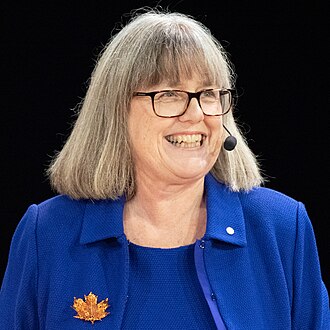
Donna Strickland changed what lasers could do. With Gerard Mourou, she developed chirped pulse amplification, a method that stretches a short laser pulse, amplifies it safely, and then compresses it again into an extremely intense burst. The idea sounds elegant because the finished explanation is clean. The achievement was far harder: it required turning a physical limitation into a design principle.
The Canadian Identity
Her Canadian identity runs through the institutions that shaped and held her career. Strickland was born in Guelph, studied engineering physics at McMaster University, and became a professor at the University of Waterloo. When she won the 2018 Nobel Prize in Physics, she became one of the most visible examples of Canadian excellence in fundamental science and the first woman in 55 years to receive the physics Nobel.
The Achievement
CPA is not an abstract triumph only for textbooks. It underpins laser systems used in eye surgery, precision manufacturing, high-energy physics, and medical research. Strickland's work shows how a graduate-student experiment can become a platform technology: something other scientists and engineers build on for decades.
The Legacy
The profile matters because Canadian scientific identity is often quiet. Strickland's career makes the quiet visible: a lab, an idea, a patient technical solution, and then a world of applications. Her Nobel recognition placed Waterloo and Canadian optics research in a global story about light, measurement, and precision.
Operational Timeline
Born in Guelph, Ontario
Born in Guelph, Ontario.
Completes engineering physics at McMaster University
Completes engineering physics at McMaster University.
Completes doctoral work in optics at the University of Rochester
Completes doctoral work in optics at the University of Rochester.
Joins the University of Waterloo
Joins the University of Waterloo.
Shares the Nobel Prize in Physics for chirped pulse amplification
Shares the Nobel Prize in Physics for chirped pulse amplification.