Technical Portrait 029
Elijah Harper
The politician holding an eagle feather who brought the machinery of constitutional change to a halt, demanding that First Nations no longer be invisible and fundamentally shifting the power balance of the Canadian state.
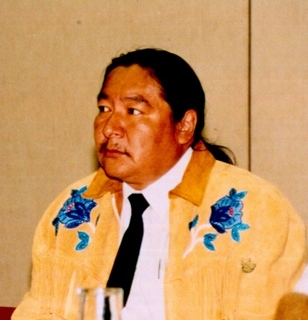
In the high-stakes theater of Canadian constitutional politics, power is usually exercised through loud debates, backdoor deals, and overwhelming majorities. In June 1990, Elijah Harper exercised power through silence. Holding a single eagle feather for spiritual strength, his quiet, repeated "No" effectively vetoed the Meech Lake Accord, altering the course of Canadian history and forcefully inserting Indigenous rights into the national narrative. His "primary power" was a refusal to be assimilated into a political process that sought to decide the future of the country while ignoring its original inhabitants. He proved that a single voice, grounded in tradition and integrity, could stop the machinery of a nation.
An Oji-Cree born at Red Sucker Lake in northern Manitoba, Harper’s early life was marked by the trauma of the residential school system—a system designed to "kill the Indian in the child." For ten years, he was separated from his family and culture, yet he emerged with an unshakeable sense of his own identity and a commitment to his people. Despite the state's efforts to erase him, he pursued education and became a bridge-builder, eventually becoming the chief of his band, and later, the first Treaty Indian to be elected as a Member of the Legislative Assembly (MLA) in Manitoba. He entered a political arena that had spent a century actively attempting to marginalize his people, and he used its own rules to demand a seat at the table.
The Early Life
Elijah Harper was born on March 3, 1949, in the remote community of Red Sucker Lake, Manitoba, the second of 13 children born to Allan and Ethel Harper. His early years were spent in a world governed by the rhythms of the land, raised largely by his grandparents who taught him the traditional Oji-Cree ways of hunting, trapping, and fishing. These foundational lessons in spiritual connection and environmental stewardship provided him with a sense of place and purpose that would later define his political career. However, this traditional upbringing was brutally interrupted at the age of eight, when he was taken by the government to attend the residential school system.
For the next decade, Harper was shuffled between schools in Norway House, Brandon, and Birtle. In these institutions, his native language was forbidden, and his culture was dismissed as "heathen." The experience was one of profound isolation and systemic erasure, yet it was also where Harper began to understand the power of collective resistance. He later attended the University of Manitoba in the early 1970s, where he studied alongside other future Indigenous leaders like Ovide Mercredi and Phil Fontaine. Together, they helped form an Indigenous student association, creating a network of intellectual and political resistance that would eventually challenge the very foundations of the Canadian constitution. This period of academic and political awakening was the forge in which Harper’s "Super" resolve was tempered.
Returning to Red Sucker Lake after his studies, Harper’s leadership qualities were quickly recognized. In 1978, at the young age of 29, he was elected Chief of the Red Sucker Lake First Nation. His tenure was marked by a drive to improve the living conditions of his community while maintaining a fierce commitment to treaty rights. He saw that local advocacy had its limits and that real change required a presence in the halls of provincial power. In 1981, he made history by becoming the first Treaty Indian elected to the Manitoba Legislative Assembly, representing the northern riding of Rupertsland for the New Democratic Party. He wasn't just a representative for his riding; he was a standard-bearer for Indigenous peoples across the province, a role he took with a quiet but formidable gravity.
The Work & Achievements
The Meech Lake Accord of 1990 was intended to be a "Quebec-round" of constitutional change, designed to recognize Quebec as a "distinct society" and bring it fully into the constitutional fold. However, the Accord was negotiated by the "Eleven Men in Suits"—the Prime Minister and the ten provincial premiers—with no consultation with Indigenous leaders. To Harper and many others, this was a glaring hypocrisy: how could the government recognize Quebec’s distinctiveness while continuing to deny the inherent rights and distinct status of the First Nations who had been on the land for millennia? As the deadline for ratification approached, Manitoba’s government attempted to bypass normal procedural rules to ensure the Accord’s passage. This required the unanimous consent of all MLAs.
From June 12 to June 21, 1990, the entire political and media apparatus of Canada was focused on the Manitoba Legislature. Day after day, as the Speaker asked for unanimous consent, Harper stood in his place, holding his eagle feather, and quietly said, "No, Mr. Speaker." The pressure was immense; he was accused of being a "spoiler" and a "traitor" to national unity. Yet, he remained unmoveable. His blockade was a "Super" feat of procedural endurance that ultimately caused the Accord to collapse, as the deadline passed without Manitoba’s approval. This single act of defiance fundamentally changed the rules of Canadian constitutionalism: it proved that Indigenous peoples could no longer be treated as an afterthought in the nation's foundational documents.
Following his provincial career, Harper transitioned to federal politics, being elected as the Member of Parliament for the riding of Churchill in 1993. As an MP, he continued to advocate for Indigenous self-government and the implementation of treaty rights. Perhaps his most significant post-political contribution was the organization of the Sacred Assembly in 1995. This gathering brought together Indigenous and non-Indigenous spiritual leaders, elders, and youth to find a common spiritual ground for reconciliation and healing. It was a radical departure from the often adversarial nature of politics, emphasizing the "primary power" of spiritual connection as a tool for social change. The Assembly’s work was a precursor to the Truth and Reconciliation Commission and helped pave the way for a more honest national conversation about the legacy of colonialism.
The Legacy of the Feather
Elijah Harper’s legacy is defined by a single, powerful image: a man in a suit, holding an eagle feather, standing against the weight of a nation’s history. He proved that dignity and tradition were more powerful than political pressure. His "No" was not an act of obstruction, but an act of inclusion—a demand that the "distinct societies" of the First Nations be given the same respect as any other. He was named the Canadian Press Newsmaker of the Year in 1990 and received numerous honors, including the Stanley Knowles Humanitarian Award and the Order of Manitoba. In 1990, he was also made an "Honorary Chief for Life" by his home community, a title that reflected the deep respect he commanded among his own people.
In 2026, Harper’s influence is seen in the foundational changes to how Canadian governments approach Indigenous relations. The era of "backdoor deals" on constitutional matters is over, replaced by a requirement for meaningful consultation and consent. The eagle feather has become a permanent symbol of Indigenous presence in legislatures across the country, a reminder of the man who used it to hold the line for his people. National Indigenous Peoples Day, celebrated every June 21, owes much to the political awakening Harper catalyzed. He taught a nation that reconciliation is not just about words; it’s about the courage to say "No" to injustice so that a more truthful "Yes" can eventually be found.
Elijah Harper passed away on May 17, 2013, but his spirit remains a guiding force in the ongoing struggle for Indigenous sovereignty. He showed that the machinery of the state, no matter how powerful, can be brought to a halt by the simple, unyielding truth of a people who refuse to be forgotten. His life was a testament to the fact that real power doesn't always come from the loudest voice, but from the one that is most certain of its ground. As he often said, "I felt if I did not stop this process, I would regret it for the rest of my life." Because of his courage, a nation was forced to look at itself and begin the long, difficult journey toward a more just and inclusive future.
Notable Quotes
"I stalled and killed it because I didn't think it offered anything to aboriginal people. It was a deal made behind closed doors by eleven men in suits."
— Elijah Harper
"I felt if I did not stop this process, I would regret it for the rest of my life. I had to stand up for my people."
— Elijah Harper
"The political process has failed us, and I believe that what is missing is the spiritual element. We need to heal as a nation."
— Elijah Harper
"We are the first inhabitants of this land. Any constitutional change must recognize that reality, or it is not a true constitution."
— Elijah Harper
Operational Timeline
Origin
Born at Red Sucker Lake, Manitoba. Raised with traditional Oji-Cree values by his grandparents.
Residential School
Forcibly removed from his home to attend residential schools, an experience that would define his future activism.
U of M
Attends the University of Manitoba, helping to form the first Indigenous student association on campus.
Elected Chief
Elected Chief of the Red Sucker Lake First Nation at the age of 29, serving his community for four years.
Historic Election
Becomes the first Treaty Indian elected to the Manitoba Legislative Assembly, representing Rupertsland.
Cabinet Minister
Appointed to the Manitoba Cabinet, serving as Minister responsible for Native Affairs and later Northern Affairs.
The Meech Lake Stand
Famous refusal to grant unanimous consent in the legislature, causing the collapse of the Meech Lake Accord.
Stanley Knowles Award
Receives the Stanley Knowles Humanitarian Award for his courageous defense of Indigenous rights.
Elected MP
Elected to the House of Commons as the Member of Parliament for the riding of Churchill.
Sacred Assembly
Organizes a national gathering of spiritual leaders to promote reconciliation and spiritual healing.
Order of Manitoba
Inducted into the Order of Manitoba in recognition of his historic contributions to the province and country.
Final Farewell
Elijah Harper passes away in Ottawa. A nation mourns a leader who changed the course of its history.
Living Legacy
The "Elijah Harper Effect" continues to influence constitutional law and Indigenous relations across Canada.