Innovation & Engineering 012
Elsie MacGill
The Queen of the Hurricanes. A relentless pioneer who broke the glass ceiling of aeronautical engineering, armed a continent during WWII, and re-engineered the social fabric of Canada.
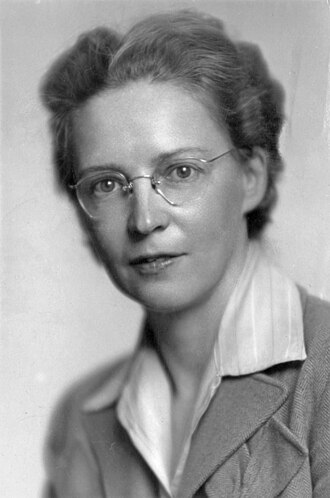
Elsie MacGill was not supposed to walk, let alone build airplanes. In 1929, just as she finished her Master’s degree in aeronautical engineering—the first woman in the world to do so—she was struck by acute polio. Told she would spend her life in a wheelchair, she instead used her engineering mind to analyze her own recovery, teaching herself to walk with metal canes and spending the next fifty years engineering the impossible. Her "primary power" was industrial orchestration—the ability to visualize a complex machine and the massive, high-speed assembly line needed to build it at scale during a global crisis.
As the Chief Aeronautical Engineer at Canadian Car and Foundry (CC&F) in Fort William (Thunder Bay), she took on a monumental task that most men in the industry thought was a fool's errand: mass-producing the Hawker Hurricane fighter plane. Under her direction, the plant went from producing railway cars to churning out three or four completed fighter planes per week, employing over 4,500 people. She didn't just build them; she designed a winterized version with skis and de-icing equipment, essential for the Arctic and Russian fronts, proving that Canadian innovation could adapt to the harshest environments on Earth.
The Early Life
Elizabeth Muriel Gregory MacGill, known to the world as Elsie, was born on March 27, 1905, in Vancouver, British Columbia. She was born into a family of trailblazers. Her mother, Helen Gregory MacGill, was B.C.'s first female judge and a prominent suffragette who spent her life fighting for legal reforms to protect women and children. Her father, James Henry MacGill, was a successful lawyer. This environment of intellectual rigor and social advocacy provided Elsie with the "Super" belief that no door was closed to her, regardless of her gender. She grew up watching her mother dismantle legal barriers, which undoubtedly influenced her own decision to enter the overwhelmingly male-dominated field of engineering.
Elsie’s academic journey was a series of historic firsts. In 1923, she enrolled in the University of Toronto’s Applied Science program, becoming the first woman to graduate from the university with a degree in Electrical Engineering in 1927. Her presence in the lecture halls was so unusual that it reportedly "turned heads" and sparked debate among the faculty. Undeterred, she moved to the United States to work for an automotive company in Pontiac, Michigan, while pursuing her Master’s in Aeronautical Engineering at the University of Michigan. She completed her degree in 1929, making her the first woman in the world to hold such a qualification. However, the triumph of her graduation was shadowed by her sudden contraction of polio, a setback that would have ended most careers but only served to sharpen Elsie’s resolve.
During her recovery, which took several years, MacGill didn't remain idle. She wrote her final exams from her hospital bed and later spent her time in Toronto writing articles on aviation and studying for her doctoral studies at MIT. By the time she was ready to return to work in 1934, she had a mastery of aeronautical theory that was virtually unmatched in Canada. She joined Fairchild Aircraft in Montreal as an assistant engineer, where she worked on the design of bush planes, machines that were the lifeblood of the Canadian North. This period allowed her to apply her theoretical knowledge to the practical challenges of Canadian geography, preparing her for the industrial leadership she would soon provide during the war years.
The Work & Achievements
In 1938, MacGill reached the peak of her engineering career when she was appointed Chief Aeronautical Engineer at Canadian Car & Foundry (CC&F) in Fort William. At the time, she was the only woman in the world to hold such a high-ranking position in the aircraft industry. Her first major project was the design of the Maple Leaf Trainer II, a biplane intended for pilot training. It is historically recognized as the first aircraft to be completely designed and produced by a woman. The Trainer II was a testament to her "Super" ability to manage a project from the initial blueprint to the final flight test. Characteristically, she insisted on accompanying the test pilots on the first flights of all her designs, despite her reliance on canes.
The outbreak of World War II shifted MacGill’s focus to the urgent needs of the British Royal Air Force. CC&F was tasked with the mass production of the Hawker Hurricane, one of the most important fighter planes of the war. MacGill oversaw the entire retooling of the plant, a logistical nightmare that she navigated with forensic precision. She managed the design and production of over 1,451 Hurricanes, implementing innovative assembly line techniques that allowed the plant to reach unprecedented speeds. Her design of a winterized version of the Hurricane, featuring skis and specialized heaters, allowed the aircraft to be used in the most extreme conditions of the Soviet and Northern European fronts, a contribution that earned her the international moniker "Queen of the Hurricanes."
Following the war, MacGill left CC&F to start her own aeronautical consulting business in Toronto, becoming a highly sought-after expert in aircraft certification and safety. She played a key role in the early years of the International Civil Aviation Organization (ICAO), becoming the first woman to chair a technical committee. Her "Super" status in the engineering world was now unquestioned, but she began to pivot back to the social advocacy she had learned from her mother. She realized that while she had broken the glass ceiling, the floor was still uneven for most women. She spent the rest of her life using her problem-solving skills to engineer a more equitable society, treating systemic sexism as just another technical challenge to be overcome.
The Legacy of Engineering
Elsie MacGill’s legacy is a dual one: she was both a master of machines and a champion of human rights. In 1967, she was appointed to the Royal Commission on the Status of Women, where she co-authored a landmark report that changed the course of Canadian social policy. Her "Separate Statement" in the report was particularly influential, as she argued for the total removal of abortion from the Criminal Code, viewing it as a private medical matter. This stance was radical for the time but reflected her engineering-like commitment to logic and individual autonomy. She served as the President of the Canadian Federation of Business and Professional Women's Clubs, continuing to mentor young women entering STEM fields.
In 2026, MacGill’s influence is celebrated as the foundational spark for the "Elsie Initiative," a global program focused on increasing the meaningful participation of women in peace operations and technical leadership. Her image has been immortalized on a commemorative Canadian coin and she remains a permanent member of the Canadian Aviation Hall of Fame and the Canadian Science and Engineering Hall of Fame. She taught a nation that the most complex systems—whether they are aircraft engines or social hierarchies—can be redesigned through persistence, precision, and a refusal to accept "impossible" as an answer. Her life proved that the "Maple Leaf" could fly higher than anyone had imagined.
Elsie MacGill passed away in 1980, but her story continues to inspire. In a world that still struggles with gender parity in engineering, she stands as a "Super" icon of what is possible when intellect and will are combined. She often said, "I have received many engineering awards, but I hope I will also be remembered as an advocate for the rights of women and children." As we look at the thriving Canadian aerospace industry today, we see the fingerprints of the Queen of the Hurricanes everywhere—in the assembly lines, in the safety protocols, and in the presence of the thousands of women engineers who have followed in her pioneering footsteps.
Notable Quotes
"I have received many engineering awards, but I hope I will also be remembered as an advocate for the rights of women and children."
— Elsie MacGill
"War effort is something which is as microscopic in the unit as the individual, but as mighty in the sum total as an army. We all have a part to play."
— Elsie MacGill
"I never learned to fly myself, but I accompanied the pilots on all test flights—even the dangerous first flight—of any aircraft I worked on. I needed to see it work."
— Elsie MacGill
"Engineering is the art of organizing and directing men and controlling the forces and materials of nature for the benefit of the human race."
— Elsie MacGill
Operational Timeline
Origin
Born in Vancouver, BC. Raised in a household dedicated to legal reform and women's rights.
Toronto First
Becomes the first woman to graduate with an Electrical Engineering degree from the University of Toronto.
Michigan Master
Becomes the first woman in the world to earn a Master's degree in Aeronautical Engineering.
The Polio Pivot
Contracts polio just before graduation. Refuses to accept permanent paralysis and begins a years-long recovery.
Fairchild Aircraft
Joins Fairchild Aircraft in Montreal, working on the design of bush planes for Canada's rugged North.
Chief Engineer
Appointed Chief Aeronautical Engineer at Canadian Car & Foundry, the first woman in the world to hold this rank.
Maple Leaf Trainer
Designs and mass-produces the Maple Leaf Trainer II, the first aircraft designed entirely by a woman.
Hurricane Flight
The first Canadian-built Hawker Hurricane takes flight under her supervision, ready for the Battle of Britain.
Comic Fame
Featured in 'True Comics' as the "Queen of the Hurricanes," becoming a symbol of female wartime contribution.
Status of Women
Appointed to the Royal Commission on the Status of Women, co-authoring the defining report on gender equality.
Order of Canada
Receives the Order of Canada for her lifelong pioneering work in engineering and human rights.
Final Departure
Elsie MacGill passes away in Cambridge, MA. Her legacy remains a pillar of Canadian aviation and feminism.
Elsie Initiative
The global 'Elsie Initiative' continues to advocate for women's leadership in technical and peace-building roles.