Technical Portrait 047
Emily Carr
The artist who made the forest feel alive, unsettled, and unmistakably Canadian.
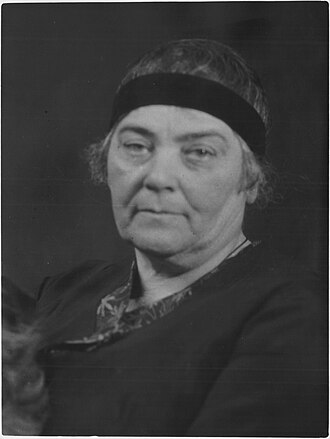
Emily Carr belongs in the national collection because she expanded what Canadian art could look and feel like. Her paintings of British Columbia forests, skies, villages, and carved forms do not treat landscape as scenery. They make it active, breathing, and sometimes overwhelming. Carr's best work gives the West Coast a visual language that is spiritual, modern, and restless.
She matters because she resisted the assumption that Canadian art had to be organized around eastern institutions or European approval. Carr worked from Victoria, from travel, from isolation, from poverty, and from a stubborn belief that the Pacific coast required its own visual language. That insistence helped make Canadian modern art less centralized and more geographically honest.
The Canadian Identity
Her Canadian identity is inseparable from place and from tension. Carr was born in Victoria and spent much of her life away from the central art institutions of Montreal, Toronto, and Europe. She also built part of her artistic reputation through depictions of Indigenous villages and poles, work that now requires careful reading because it sits inside colonial history as well as art history. A serious profile has to hold both truths: her formal power and the cultural conditions around her subject matter.
Carr's Canada is not tidy. It is coastal, forested, colonial, spiritual, and contested. That is why her profile remains alive. Her paintings can be admired for their force while also prompting questions about who represents whom, what artists owe to the communities they depict, and how national art can carry unresolved histories.
The Achievement
The achievement is the invention of a personal modernism. Carr studied abroad, absorbed new approaches to form and colour, and then returned to British Columbia with a vocabulary that could meet the density of cedar, rain, movement, and memory. Recognition came unevenly and late, but exhibitions in the 1920s and later writing success helped place her among the central figures of Canadian art.
Her mature forest paintings are not passive landscapes. Trunks bend, skies pulse, greens and blues press against each other, and the whole surface seems animated by weather and spirit. Carr made the forest a subject with agency. That is the formal achievement: she did not merely paint place; she made place feel like a force.
The Legacy
Her legacy is larger than painting alone. Carr was also a writer, and books such as Klee Wyck brought her voice to a wider public. Today her work remains iconic and debated, admired for its force and studied for its relationship to Indigenous representation. That complexity makes her more important, not less: she is one of the figures through whom Canada still argues about art, land, memory, and responsibility.
Carr's lasting value is that she makes national culture harder to simplify. She is a major artist, a regional modernist, a writer, a difficult witness, and a figure whose work demands both visual attention and ethical context. Comprehensive Canadian memory has room for that complexity.
Operational Timeline
Born in Victoria
Born in Victoria, British Columbia, placing her at the edge of Canada's western colonial expansion and Pacific coast culture.
Studies art in San Francisco and later in England and France
Studies art in San Francisco and later in England and France, absorbing methods that would later be transformed by West Coast subject matter.
Travels to Indigenous communities on the Northwest Coast and develops major subject...
Travels to Indigenous communities on the Northwest Coast and develops major subject matter that remains central and contested in her reputation.
Exhibits in the National Gallery of Canada's West Coast art exhibition
Exhibits in the National Gallery of Canada's West Coast art exhibition, receiving a stronger national context for her work.
Publishes Klee Wyck
Publishes Klee Wyck, later recognized with a Governor General's Award and expanding her public identity as a writer.
Dies in Victoria
Dies in Victoria, leaving a body of work central to Canadian modernism and still debated in Canadian art history.