Medical Breakthrough 002
Frederick Banting
The surgeon who unlocked the secret of insulin. A pivot point in human survival.
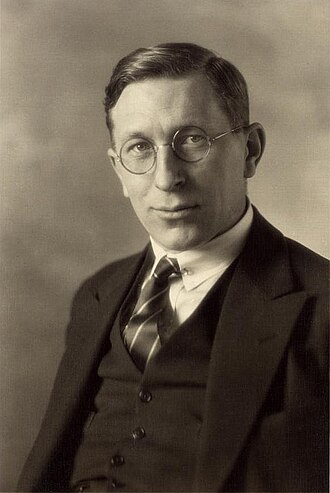
Before the discovery of insulin, a diagnosis of type 1 diabetes was effectively a slow and agonizing death sentence. Children afflicted with the disease were placed on extreme starvation diets, often consuming fewer than 500 calories a day, because doctors had no reliable way to replace the internal secretion their bodies could no longer produce. Frederick Banting entered this desperate world not as an established researcher, but as a young Canadian physician with a revolutionary idea, a borrowed laboratory, and an uncompromising degree of persistence. His work would not only unlock the secret of insulin but would also mark a pivot point in the history of human survival, transforming a fatal condition into a manageable one for millions of people worldwide.
In the humid summer of 1921, at the University of Toronto, Banting worked alongside his research assistant, Charles Best, under the skeptical but necessary direction of Professor J.J.R. Macleod. Their grueling series of experiments led to the successful isolation of pancreatic extracts that could reliably control blood sugar levels in diabetic dogs. With the later addition of biochemist James Collip, who helped purify the extract for human use, the team moved toward clinical trials. In January 1922, Leonard Thompson, a 13-year-old boy lying near death in a Toronto hospital, became one of the first humans to receive the treatment. Within weeks, the miracle of insulin was undeniable; children who had been written off as terminal were literally waking up from diabetic comas and returning to health.
The Early Years
Frederick Grant Banting was born on November 14, 1891, on a farm in Alliston, Ontario. The youngest of five children, his upbringing was rooted in the values of hard work and religious devotion. His parents, William Thompson Banting and Margaret Grant, initially hoped he would enter the ministry. Following their wishes, Frederick enrolled in theology at Victoria College at the University of Toronto in 1910. However, his natural inclination toward science and medicine could not be ignored. After a year of struggling with his theological studies, he made the courageous decision to switch to medicine, a choice that would eventually change the course of medical history. He graduated with his Bachelor of Medicine in 1916, just as the horrors of World War I were reaching their peak.
Banting immediately enlisted in the Royal Canadian Army Medical Corps. His experience as a military surgeon was formative, exposing him to the brutal realities of trauma medicine and reinforcing his innate sense of duty. In 1918, during the Battle of Cambrai, he was wounded by shrapnel in his right arm. Despite his injury, and the direct orders of his superiors to seek medical attention, Banting continued to treat wounded soldiers for sixteen consecutive hours under heavy fire. For this extraordinary act of heroism, he was awarded the Military Cross. This period of his life forged the "grit" that would later define his scientific career; he was a man who understood that breakthroughs often required enduring immense pressure and physical hardship.
After the war, Banting struggled to establish a medical practice in London, Ontario. It was during this period of professional uncertainty that he encountered the medical paper that would spark his world-changing idea. On the night of October 31, 1920, unable to sleep and ruminating on a lecture he had to prepare, he scribbled twenty-five words in his notebook that outlined a method for isolating the internal secretion of the pancreas. This "Idea" was born not of complex theory, but of a surgeon's practical understanding of anatomy and a relentless curiosity about the cause of human suffering. He knew he needed a laboratory and expert guidance, leading him back to the University of Toronto and his fateful meeting with Macleod.
Persistence Over Polished Theory
Banting was not a specialist in diabetes or endocrinology; he was a surgeon with a restless mind and a profound intolerance for scientific dogma. His breakthrough came from a simple, dogged observation while preparing a lecture for students at Western University. Unlike the established researchers of his day, who were bogged down by years of conflicting data, Banting was willing to chase a high-risk hypothesis through a humid Toronto summer in a workspace many would have found inadequate. The heat in the University of Toronto laboratory was so intense that some of their early experiments failed simply because the extracts spoiled, yet Banting and Best persisted, often sleeping on the lab floor to monitor their test subjects around the clock.
The result was not just a medical advance; it was a before-and-after moment in human survival. A condition once managed by hunger and waiting could now be treated with a simple injection. The fame that followed the discovery was something Banting struggled with. He was a man of simple tastes and a deep sense of humility. When he and Macleod were awarded the Nobel Prize in Physiology or Medicine in 1923, Banting was outraged that Charles Best had been overlooked. In a characteristic act of loyalty, he immediately announced that he would share his prize money with Best, compelling Macleod to do the same with Collip. This gesture reflected the collaborative—if sometimes fractious—reality of the discovery and Banting's belief that scientific triumph should never be a solitary achievement.
The Artist Surgeon
Beyond the laboratory, Frederick Banting possessed a deeply creative soul. He was an accomplished amateur painter and a close friend of A.Y. Jackson, one of the founding members of the Group of Seven. Banting often found solace from the pressures of his medical fame by embarking on sketching trips to the Canadian North and rural Quebec. His paintings, which often captured the rugged, unyielding beauty of the Canadian landscape, were a testament to his connection to the land and his need for quiet contemplation. To Banting, art and science were not disparate fields; they were both ways of observing and interpreting the fundamental truths of the world.
His artistic sensitivity informed his medical practice as well. He was known for his bedside manner and his genuine concern for the well-being of his patients. He once remarked, "The greatest reward is the knowledge that you have helped someone." This empathy was the driving force behind his later research into silicosis—a debilitating lung disease affecting miners—and his work in aviation medicine. During the early years of World War II, Banting was instrumental in the development of the "G-suit," a garment designed to prevent pilots from blacking out during high-acceleration maneuvers. He understood that the survival of a nation depended as much on the health of its people as it did on the strength of its weapons.
The Final Mission
Banting's life was cut tragically short by his unwavering commitment to his country. In February 1941, while serving as a Major in the Royal Canadian Army Medical Corps, he embarked on a secret mission to Great Britain. His goal was to coordinate medical research efforts between Canada and the UK during the height of the Blitz. On the night of February 21, the Lockheed Hudson bomber he was traveling in crashed in a remote area of Newfoundland shortly after takeoff. Banting survived the initial impact and, true to his nature, attempted to treat the injuries of the pilot before succumbing to his own wounds in the freezing cold. He was 49 years old.
Today, Frederick Banting’s legacy is preserved not just in the millions of lives saved by insulin, but in the institutions that bear his name. The Banting House National Historic Site in London, Ontario, stands as a monument to the "birthplace of insulin," while the Flame of Hope continues to burn outside its doors. The flame was lit by the Queen Mother in 1989 and will only be extinguished when a definitive cure for diabetes is found. Banting’s story remains a powerful reminder that sometimes the greatest breakthroughs come not from the most polished theories, but from the most persistent hearts. He was a man who saw a problem, believed he could solve it, and refused to stop until the world was changed for the better.
Notable Quotes
"Insulin does not belong to me, it belongs to the world."
— Frederick Banting
"I am a firm believer that it is not the number of years that counts, but what you do in those years."
— Frederick Banting
"The greatest reward is the knowledge that you have helped someone."
— Frederick Banting
"It is not within the power of the properly constructed human mind to be satisfied with any achievement."
— Frederick Banting
Operational Timeline
Origin
Born in Alliston, Ontario. The youngest of five children, raised in a hardworking farming family.
The Switch
Switches from theological studies to medicine at the University of Toronto, following his true calling.
Military Enlistment
Joins the Royal Canadian Army Medical Corps immediately after graduating from medical school.
Military Cross
Wounded at the Battle of Cambrai. Continues to treat casualties for 16 hours despite his own injury.
The Idea
Scribbles the pivotal idea for isolating pancreatic secretions in his notebook on the night of October 31.
Insulin Breakthrough
Conducts the pivotal experiments at the University of Toronto that successfully isolate insulin.
First Human Success
Leonard Thompson, a 13-year-old diabetic patient, is successfully treated with the first human insulin injection.
Nobel Prize
Awarded the Nobel Prize in Physiology or Medicine at age 32, the youngest recipient in the field's history.
Knighthood
Knighted by King George V as Sir Frederick Banting for his immense contributions to medical science.
The Last Flight
Major Banting dies in a plane crash in Newfoundland while on a secret wartime mission to Great Britain.
Centennial Legacy
The 100th anniversary of the discovery of insulin is celebrated globally, honoring the millions of lives saved.
Modern Legacy
Insulin analogues and advanced delivery systems continue to save millions of lives globally.