Technical Portrait 048
Glenn Gould
The pianist who made the recording studio feel like an instrument of thought.
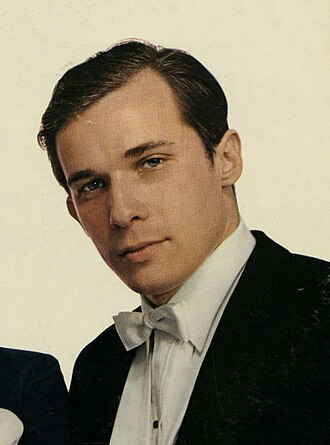
Glenn Gould is one of Canada's most distinctive artistic Supers because he did not only perform music; he changed the terms of performance. His 1955 recording of Bach's Goldberg Variations made him internationally famous almost overnight. The playing was fast, clear, intensely structured, and unlike the dominant romantic approach to Bach. It sounded as if the music had been rebuilt from the inside.
Gould matters because he made interpretation feel like philosophy. He treated every performance decision as an argument about structure, technology, solitude, and the listener's role. That made him more than a pianist with unusual habits. He became a Canadian thinker whose medium was sound.
The Canadian Identity
Gould's Canadian identity is Toronto-rooted and media-minded. He was born in Toronto, trained there, recorded there, and built a large part of his later career through the Canadian Broadcasting Corporation. He did not need to become a European-style concert celebrity to matter. In fact, he rejected that model, leaving live performance in 1964 to focus on recording, radio, television, writing, and the possibilities of edited sound.
His connection to the CBC is especially important. Gould used Canadian public broadcasting not as a fallback, but as a creative laboratory. Through radio documentaries and studio experiments, he turned national media infrastructure into an artistic instrument.
The Achievement
The achievement is intellectual as well as musical. Gould treated the studio as a place where interpretation could be refined beyond the limits of a single public event. His Bach recordings remain central, but his radio documentaries, especially The Idea of North, show another side of his importance: a Canadian artist using broadcast technology to think about solitude, geography, voice, and national imagination.
His Bach is often remembered for clarity, speed, and contrapuntal control, but the deeper achievement is independence. Gould made choices that could sound eccentric because they were grounded in a complete artistic worldview. He showed that a performer could be a theorist, editor, broadcaster, and architect of listening.
The Legacy
His legacy is a productive argument. Some listeners hear eccentricity first: the chair, the humming, the gloves, the refusal of concert life. But those details matter less than the larger question he posed. What if technology did not corrupt art, but allowed a more exact form of it? Canadian culture still benefits from that question.
Gould also left a model for artists working outside expected centres of authority. He did not become important by disappearing into Europe. He became important by making Toronto, the studio, and the broadcast network part of his artistic identity. That remains a powerful Canadian lesson.
Operational Timeline
Born in Toronto
Born in Toronto, Ontario, into the city that would remain the base for his training, recording, and broadcast imagination.
Records Bach's Goldberg Variations
Records Bach's Goldberg Variations, creating one of the most famous classical recording debuts of the twentieth century.
Performs internationally as his reputation grows
Performs internationally as his reputation grows, while already showing discomfort with the rituals of concert celebrity.
Withdraws from public concert performance to focus on recording
Withdraws from public concert performance to focus on recording, broadcasting, writing, and studio-based interpretation.
Creates The Idea of North
Creates The Idea of North, using layered voices and radio form to explore solitude, geography, and Canadian imagination.
Records a second Goldberg Variations
Records a second Goldberg Variations, offering a slower and more reflective counterpoint to his 1955 breakthrough.
Dies in Toronto
Dies in Toronto, leaving recordings and broadcasts that continue to shape arguments about performance and technology.