Technical Portrait 025
Gordon Lightfoot
The troubadour who set the rugged geography and quiet melancholy of a vast nation to acoustic chords.
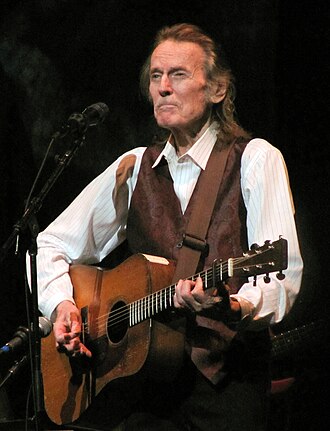
If Canada had a national voice, for over half a century it sounded like a rich, resonant baritone accompanied by the precise picking of a twelve-string guitar. Gordon Lightfoot did not just write songs; he crafted aural landscapes. He mapped the country’s railways, rivers, and shipwrecks in verse, defining the Canadian identity not through grand political declarations, but through the intimate struggles of the people traversing its immense geography. His work served as a bridge between the traditional folk ballads of the past and the sophisticated pop-rock of the modern era, creating a sound that was at once ruggedly northern and universally accessible. For decades, he was the storyteller who explained Canada to itself, and in doing so, he became one of the most respected songwriters in the history of popular music.
Born in Orillia, Ontario, Lightfoot's musical journey began in local church choirs and barbershop quartets. His formal education took him to California to study jazz composition, but the burgeoning folk revival of the early 1960s drew him back to the coffeehouses of Toronto's Yorkville district. There, he forged a sound that was intrinsically North American, yet distinctly his own. This period in Yorkville was a crucible for Canadian talent, where Lightfoot shared stages with the likes of Joni Mitchell and Neil Young, all of them searching for a voice that could speak to the changing times while remaining rooted in the vast, often unforgiving Canadian landscape.
The Early Years
Gordon Meredith Lightfoot Jr. was born on November 17, 1938, in the small lakeside town of Orillia. His mother, Jessie Alice, recognized his musical talent early on, encouraging him to join the choir at St. Paul's United Church. By age 12, he was a local celebrity, winning vocal competitions at the Kiwanis Music Festival and making his first appearance at Toronto’s prestigious Massey Hall. These early experiences in choral music and traditional ballads gave him a foundational understanding of melody and harmony that would later distinguish his songwriting from the simpler three-chord structures of many of his folk contemporaries.
During his teenage years, Lightfoot taught himself to play the guitar and piano, and he spent his summers working as a delivery boy and a linen-truck driver, jobs that allowed him to observe the daily rhythms of small-town Ontario life. In 1958, he made the bold decision to move to Los Angeles to study jazz composition and orchestration at the Westlake College of Modern Music. To support himself, he wrote commercial jingles and worked as a demo singer, gaining a professional edge in the recording industry. However, the pull of home was strong, and the acoustic folk music coming out of New York and Toronto resonated more deeply with him than the jazz world of Southern California. He returned to Canada in 1960, just as the folk revival was beginning to explode.
Back in Toronto, Lightfoot became a member of the "Singing Swingin' Eight," a vocal group on the CBC's "Country Hoedown," but he soon realized his true calling was as a solo performer and songwriter. He began playing the coffeehouses of Yorkville, then a bohemian enclave filled with artists, poets, and musicians. It was here that he wrote "Early Morning Rain" and "For Lovin' Me," songs that would soon be covered by international stars like Ian & Sylvia and Peter, Paul and Mary. These early successes established him as a songwriter of rare depth, capable of capturing the restlessness of the modern traveler and the bittersweet reality of nomadic life.
The Painter of Song
Lightfoot possessed an uncanny ability to distill historical events and personal heartbreak into timeless ballads. His 1967 song "Canadian Railroad Trilogy," commissioned by the CBC for Canada's centennial, captured the brutal, triumphant labor of connecting the nation by steel. The song is a masterpiece of structure, moving from a slow, contemplative opening to a driving, rhythmic middle section that mimics the motion of a train, before returning to a quiet reflection on the cost of progress. It remains perhaps the definitive musical statement on the building of Canada, a song that treats history not as a dry textbook entry, but as a living, breathing human drama.
Later, in 1975, he read a short news magazine article about the sinking of a freighter on Lake Superior. The resulting song, "The Wreck of the Edmund Fitzgerald," released in 1976, remains a masterclass in narrative songwriting. Over its six-and-a-half-minute duration, Lightfoot transforms a modern maritime disaster into an enduring myth, honoring the 29 men who lost their lives with a haunting melody and meticulously researched lyrics. The song's success was unprecedented for a folk ballad in the disco era, proving that audiences still craved stories of substance and emotional weight. It remains a staple of North American radio, a permanent tribute to the power and danger of the Great Lakes.
Beyond the historical epics, Lightfoot was a profound chronicler of romantic failure. Songs like "If You Could Read My Mind" and "Sundown" explored jealousy, regret, and the complexities of love with a lyrical honesty that resonated globally. "If You Could Read My Mind," released in 1970, was inspired by the dissolution of his first marriage and became an international hit, covered by over 100 artists including Barbra Streisand and Johnny Cash. His ability to articulate the interior life of a person struggling with their own emotions earned him devoted fans among his peers, including Bob Dylan, who famously stated he never wanted a Lightfoot song to end. Lightfoot's work was characterized by a meticulous craftsmanship; he was known to spend weeks, sometimes months, refining a single verse until every syllable sat perfectly against the melody.
The Musical Architect
The "Lightfoot Sound" was built on a foundation of intricate guitar work and a distinctive, baritone voice that seemed to carry the weight of the Canadian wilderness. He was a master of the twelve-string acoustic guitar, using its shimmering, orchestral quality to fill the space in his arrangements. His accompaniment style was precise and rhythmic, often featuring the interplay between his own guitar and the lead guitar of his long-time collaborator, Terry Clements. This partnership, which lasted for over forty years, was central to the consistency of his sound, providing a reliable musical bed for his evocative lyrics.
Lightfoot was also a pioneer in the "singer-songwriter" movement, a genre that prioritized personal expression and lyrical integrity over commercial trends. While his music often crossed over into the pop and country charts, he never compromised his artistic vision for the sake of a hit. He was a perfectionist in the studio, often recording multiple versions of a song until he achieved the exact emotional tone he was looking for. His influence can be heard in the work of countless artists who followed in his footsteps, from James Taylor to Dan Fogelberg, and his songs continue to be studied by aspiring songwriters as examples of how to balance narrative clarity with poetic abstraction.
His commitment to his craft was legendary. He continued to write and record into his eighties, always seeking to refine his sound and find new ways to tell stories. His 2020 album, *Solo*, was a stark, intimate collection of songs that stripped away the production of his earlier work, leaving only his voice and guitar. It was a fitting late-career statement from an artist who had spent his life exploring the power of simplicity. Even as his voice aged and became more fragile, it retained an expressive power that could still move an audience to tears, a testament to the enduring strength of the songs themselves.
The Enduring Legacy
Despite his massive international success, Lightfoot remained fiercely rooted in Canada. He continued touring vigorously into his eighties, driven by an unyielding dedication to his craft and his audience. He survived a near-fatal aneurysm in 2002 and multiple health scares, his physical frailty in later years standing in stark contrast to the robust, unaging power of his catalog. He famously refused to cancel shows unless it was absolutely necessary, once performing a full concert in Orillia just days after being released from the hospital. This work ethic was born of a deep respect for his fans and a belief that the stage was where he truly belonged.
Gordon Lightfoot was the musical architect of the Canadian soul. He took the cold winds of the north and the deep waters of the Great Lakes and wove them into songs that will outlast the generations that first heard them. His impact was recognized with numerous honors, including 17 Juno Awards and induction into the Canadian Music Hall of Fame and the Songwriters Hall of Fame. In 2003, he was named a Companion of the Order of Canada, the country's highest civilian honor, a recognition of his status as a national treasure. But perhaps his greatest achievement was the way his music became part of the everyday lives of Canadians, a soundtrack for long drives across the prairies or quiet evenings by the fire.
When he passed away on May 1, 2023, the outpouring of grief was national and international. Tributes poured in from Prime Ministers, fellow musicians, and fans from around the world. Massey Hall, the venue he considered his second home, dimmed its lights in his honor. But Gordon Lightfoot's voice remains. It lives on in the rhythmic strumming of an acoustic guitar, in the haunting tale of a lost ship, and in the quiet reflection of a heart trying to find its way home. He didn't just sing about Canada; he helped create it, one song at a time.
Notable Quotes
"I just let the songs happen. I don't try to force them. If they want to be written, they'll find a way."
— Gordon Lightfoot
"I can't think of any Gordon Lightfoot song I don't like. Every time I hear a song of his, it's like I wish it would last forever."
— Bob Dylan
"The songs are the most important thing. They're the only thing that lasts after the applause dies down."
— Gordon Lightfoot
"I'm just a guy who writes songs and sings them. I'm not a philosopher, just a craftsman trying to get it right."
— Gordon Lightfoot
Operational Timeline
Origin
Gordon Meredith Lightfoot Jr. is born in Orillia, Ontario. Shows early musical promise in church choirs.
Formal Training
Moves to Los Angeles to study jazz composition and orchestration at Westlake College of Modern Music.
Yorkville Roots
Returns to Toronto and becomes a central figure in the blossoming Yorkville folk music scene.
Debut Album
Releases 'Lightfoot!', featuring early classics like "Early Morning Rain" and "For Lovin' Me."
Canadian Railroad Trilogy
Writes and performs the epic ballad for Canada's Centennial year broadcast, commissioned by the CBC.
Global Breakthrough
Releases "If You Could Read My Mind," achieving massive international commercial and critical success.
Sundown Success
The album 'Sundown' and its title track both hit #1 on the US Billboard charts, a rare feat for a folk artist.
The Edmund Fitzgerald
Releases the haunting maritime narrative "The Wreck of the Edmund Fitzgerald," documenting the 1975 disaster.
Hall of Fame
Inducted into the Canadian Music Hall of Fame during the Juno Awards ceremony.
Health Crisis
Suffers a near-fatal abdominal aortic aneurysm before a concert in Orillia; makes a miraculous recovery.
Companion of the Order
Elevated to the highest rank of the Order of Canada, cementing his status as a national treasure.
Songwriters Hall of Fame
Inducted into the Songwriters Hall of Fame in New York City, recognizing his global influence.
Solo Statement
Releases 'Solo,' his final studio album, featuring stripped-back recordings of his voice and guitar.
Final Sign-off
Gordon Lightfoot passes away on May 1 in Toronto at the age of 84, leaving behind a peerless legacy.