Technical Portrait 049
Joni Mitchell
The songwriter who mapped private feeling with the scale of a landscape.
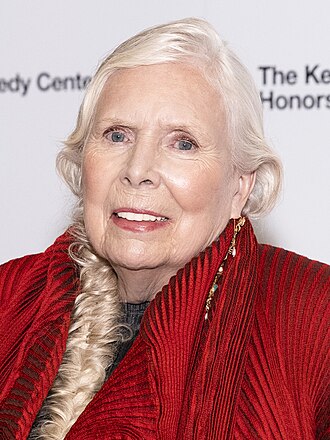
Joni Mitchell belongs here because she expanded the emotional and musical vocabulary of popular song. Born in Alberta and raised largely in Saskatchewan, she carried Prairie openness, visual imagination, jazz harmony, and lyrical precision into a body of work that influenced folk, rock, pop, and singer-songwriter traditions. Her songs made interior life feel architecturally complex.
Mitchell matters because she did not simply represent a scene; she kept outgrowing scenes. Folk rooms, Laurel Canyon, jazz collaboration, painting, political observation, and experiments with tuning all became part of one restless artistic life. Canada can claim her not as a fixed emblem, but as an artist whose freedom is the point.
The Canadian Identity
Her Canadian identity is western, mobile, and self-inventing. The landscapes of Alberta and Saskatchewan do not explain all of Mitchell's music, but they help account for the spaciousness in her imagination. She wrote with the eye of a painter and the ear of someone willing to let songs breathe beyond standard forms.
Mitchell also represents the Canadian artist who becomes global without becoming generic. Her work travelled through American music culture, but it kept a distinctive sense of distance, observation, weather, and memory. She often sounded like someone inside the moment and outside it at the same time.
The Achievement
The achievement is a catalogue that changed songwriting standards. Blue became a landmark of emotional directness, while later albums pushed harmony, rhythm, and arrangement into more experimental territory. Mitchell's open tunings altered the physical logic of the guitar, giving her songs shapes that other writers could admire but not easily imitate.
Her greatness is also visual. Mitchell is a painter as well as a musician, and that matters because her songs often move like paintings: precise images, colour, distance, foreground, and sudden shifts in perspective. She wrote feelings as scenes and scenes as moral weather.
The Legacy
Mitchell's legacy is heard in generations of songwriters who learned from her candour, melodic risk, and harmonic freedom. She made vulnerability demanding rather than soft. Her influence appears wherever artists treat personal writing as a place for intelligence, not confession alone.
For Canada, she stands as one of the country's great cultural exports and one of its most independent artists. Her work shows that national significance does not require patriotic subject matter. Sometimes the national contribution is an artist who changes the world's sense of what a song can hold.
Operational Timeline
Born in Fort Macleod
Born in Fort Macleod, Alberta, before growing up in the Prairie environment that shaped her early imagination.
Begins performing in Canadian folk clubs
Begins performing in Canadian folk clubs, developing as a songwriter before becoming internationally known.
Releases Blue
Releases Blue, a defining album of personal songwriting and one of the central works of the singer-songwriter era.
Releases Court and Spark
Releases Court and Spark, bringing wider commercial success while expanding her harmonic and production language.
Releases Mingus
Releases Mingus, reflecting her deepening engagement with jazz and her refusal to stay inside one genre.
Receives major lifetime honours while continuing to be recognized as a painter and...
Receives major lifetime honours while continuing to be recognized as a painter and musician.
Her catalogue receives renewed public celebration
Her catalogue receives renewed public celebration, confirming the durability of her influence across generations.