Technical Portrait 021
Leonard Cohen
The gravel-voiced poet who mined the divine out of the profane, giving the world a vocabulary for its beautiful defeats.
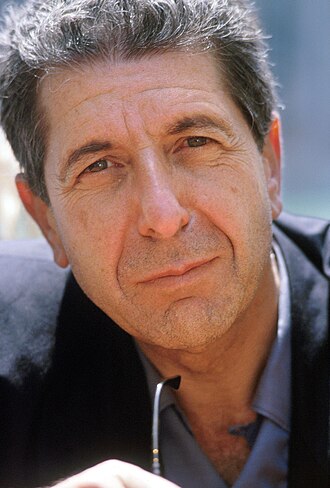
Among musicians, he was the poet; among poets, he was the musician. Leonard Cohen occupied a solitary, glittering space in the cultural landscape, armed with a deep baritone voice and an acoustic guitar. He did not sing songs of simple joy or clear triumph. Instead, he charted the murky territories of human frailty, romantic despair, and religious longing, finding a sacred resonance in the most earthly of experiences. His "primary power" was a lyrical precision that could strip a soul bare, revealing the "beautiful defeat" that lies at the heart of the human condition.
Born into a prominent Jewish family in Westmount, Quebec, Cohen began his career strictly as a man of letters. He published poetry and novels to critical acclaim in Canada during the 1950s and 60s, but found literary life financially unviable. In a pivot that would change music history, he moved to the United States in 1967 to try his hand at writing songs, quickly embedding himself in the folk scene of the Chelsea Hotel and Andy Warhol's Factory. Over the next five decades, he would become one of the most influential songwriters of all time, a man whose work bridged the gap between the high art of the academy and the raw emotion of the jukebox.
The Life of a Wandering Scholar
Leonard Norman Cohen was born on September 21, 1934, in the affluent Montreal suburb of Westmount. His family was a pillar of the local Jewish community; his grandfather Lyon Cohen was the founding president of the Canadian Jewish Congress, and his father Nathan ran a successful clothing business. This background instilled in Leonard a deep sense of tradition, a reverence for the written word, and an early awareness of the liturgical rhythms of the synagogue. The loss of his father when Leonard was only nine years old cast a long shadow over his childhood, perhaps contributing to the melancholic undertone that would later define his work. He sought refuge in music and literature, learning his first guitar chords from a Spanish flamenco player he met in a Montreal park—a brief encounter that left a permanent mark on his musical style.
At McGill University, Cohen emerged as a literary prodigy. He was part of a vibrant circle of young poets and intellectuals who were redefining Canadian literature in the post-war era. His first collection of poetry, Let Us Compare Mythologies (1956), was published while he was still an undergraduate, earning him immediate critical respect. However, the stifling atmosphere of 1950s Montreal felt restrictive to his restless spirit. In 1960, using a small legacy left by his grandmother, Cohen purchased a house on the Greek island of Hydra. At the time, Hydra was a primitive paradise with no cars and limited electricity, a haven for a colony of international artists and writers. It was here, under the Aegean sun, that Cohen wrote his most famous novels, The Favourite Game and Beautiful Losers, and lived a legendary romance with Marianne Ihlen, the woman who would inspire some of his most enduring songs.
By the mid-1960s, despite his literary success, Cohen was "starving on the page." The royalties from his books were insufficient to support him, and he felt the siren call of the burgeoning folk-rock movement in New York City. He arrived in Manhattan in 1966, a thirty-two-year-old poet among teenagers, but his maturity and lyrical depth immediately set him apart. He took up residence in the Chelsea Hotel, a bohemian landmark where he crossed paths with Janis Joplin, Joni Mitchell, and Bob Dylan. His debut album, Songs of Leonard Cohen (1967), was a revelation. With songs like "Suzanne" and "Famous Blue Raincoat," he introduced a new level of literary sophistication to popular music, proving that a song could be as complex and demanding as a poem.
The Anthem of the Broken
Cohen's lyrical precision was staggering. He approached songwriting like a master craftsman cutting diamonds. His magnum opus, Hallelujah, famously required years of labor and filled several notebooks with over 80 draft verses before he distilled it into its final form. The song, initially rejected by his American record label as non-commercial, gradually evolved into a modern secular hymn, covered by hundreds of artists and deeply embedded in the global consciousness. It is a song that manages to be simultaneously erotic and religious, a "broken Hallelujah" that resonates with anyone who has ever wrestled with the complexities of faith and desire.
In the 1980s, when many of his contemporaries were struggling to remain relevant, Cohen underwent a radical stylistic shift. He traded his acoustic guitar for cheap Casio keyboards and embraced a more polished, synthesized sound. The resulting album, I'm Your Man (1988), was a massive comeback, featuring a darker, more ironic tone and a voice that had deepened into a profound, rumbling bass. This was the era of the "Tower of Song," where Cohen acknowledged his position as a veteran craftsman in the service of the muse. He became an unlikely pop star in Europe, his gravelly delivery and impeccable suits making him the quintessential "prince of gloom" for a new generation of fans.
The Monk and the Maestro
Cohen's relationship with spirituality was deeply complex. He was fiercely devoted to his Jewish heritage, yet spent five years in seclusion as an ordained Rinzai Zen Buddhist monk at the Mt. Baldy Zen Center near Los Angeles in the 1990s. Taking the Dharma name Jikan, meaning "silence," he spent his days scrubbing floors, cooking for his teacher Kyozan Joshu Sasaki Roshi, and meditating in the frigid mountain air. This juxtaposition of the sacred and the worldly defined his entire existence. He wasn't looking for a new religion; he was looking for a way to quiet the "noise" of his own mind and the relentless depression that had dogged him for decades.
Forced out of retirement in his seventies due to financial embezzlement by his manager, Cohen embarked on a series of marathon, deeply emotional world tours. What began as a financial necessity turned into a triumphant late-career victory lap. He performed with the humility of a servant and the mastery of a king, often kneeling on stage as he delivered three-hour sets to adoring crowds. When he released his final album, You Want It Darker, weeks before his death, he offered a fearless, poetic farewell, declaring himself "ready, my Lord." The title track, with its haunting "Hineni" (the Hebrew word for "here I am"), was a final testament to his enduring faith and his unflinching gaze into the mystery of mortality.
The Enduring Resonance
Leonard Cohen’s legacy is not just found in the records he sold or the awards he won, but in the way his words have become a vocabulary for the human experience. He provided a language for the "cracks in everything," teaching us that the light only enters through our imperfections. His influence is felt in every songwriter who prioritizes the weight of a word over the catchiness of a hook. From the haunting covers of Nick Cave to the baroque arrangements of Rufus Wainwright, Cohen’s DNA is woven into the fabric of modern music. He was a man who understood that "there is no cure for love," and his work remains a source of solace and strength for all those navigating the "beautiful defeat."
Notable Quotes
"Forget your perfect offering. There is a crack, a crack in everything. That's how the light gets in."
— Leonard Cohen, from 'Anthem'
"I have tried in my way to be free."
— Leonard Cohen, from 'Bird on the Wire'
"Poetry is just the evidence of life. If your life is burning well, poetry is just the ash."
— Leonard Cohen
"Even damnation is poisoned with rainbows."
— Leonard Cohen, from 'Beautiful Losers'
Operational Timeline
Origin
Born in Westmount, Montreal. A childhood defined by the liturgical beauty of the synagogue and the loss of his father.
First Poetry Collection
Publishes 'Let Us Compare Mythologies,' establishing his voice as a major Canadian poet while still at McGill.
The Hydra Years
Moves to the Greek island of Hydra, where he writes his most famous novels and lives a legendary bohemian life.
Songs of Leonard Cohen
Releases his debut album in New York, featuring 'Suzanne' and 'Famous Blue Raincoat.' He becomes the poet of the folk scene.
Isle of Wight
Performs a legendary set at the Isle of Wight Festival, calming a volatile crowd with his quiet, hypnotic presence.
Hallelujah
Releases 'Various Positions,' containing 'Hallelujah.' The song is initially ignored but eventually becomes a global anthem.
I'm Your Man
Reinvents his sound with synthesizers and a deeper baritone. The album becomes a massive critical and commercial hit.
Monastic Seclusion
Ordained as a Rinzai Zen Buddhist monk at Mt. Baldy. He takes the Dharma name Jikan, meaning 'silence.'
The Legal Battle
Discovers his manager has embezzled his life savings. He is forced to return to the stage at age 73.
The Grand Tour
Begins a five-year world tour, performing hundreds of shows to universal acclaim and standing ovations.
The Final Masterpiece
Releases 'You Want It Darker' just weeks before his death, serving as a profound musical eulogy and farewell.
Final Departure
Leonard Cohen passes away in Los Angeles on November 7. He is buried in a traditional Jewish ceremony in Montreal.