Technical Portrait 018
Lester B. Pearson
A diplomat of extraordinary vision who cooled the fires of global war and forged the modern identity of his nation.
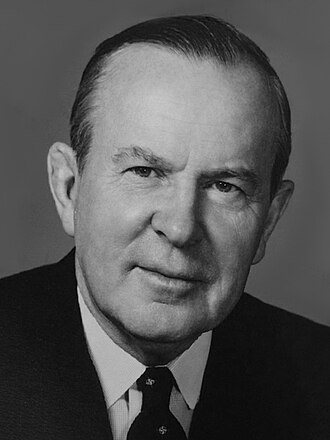
History often rewards the loud and the aggressive, but Lester B. Pearson bent the trajectory of the 20th century through quiet, relentless diplomacy. As Canada's foremost diplomat and later its 14th Prime Minister, "Mike" Pearson navigated crises that threatened to engulf the world, demonstrating that a middle power could wield immense influence through moral authority and diplomatic ingenuity. His "primary power" was an extraordinary ability to find common ground in the most fractured landscapes, whether between warring superpowers or divided political factions at home.
Born near Toronto in Newtonbrook, Pearson survived the brutal trenches of World War I, an experience that forged his deep-seated aversion to military conflict and his lifelong commitment to the search for peaceful resolutions. He transitioned into the diplomatic corps during its infancy in Canada, quickly becoming a key figure at the United Nations and NATO. He utilized his affable, bowtie-wearing persona to build consensus in rooms paralyzed by Cold War hostility, earning a reputation as one of the most effective negotiators of his era. His legacy is not just one of policy, but of a specific kind of Canadian leadership: pragmatic, compassionate, and globally minded.
The Life of a Pragmatic Visionary
Lester Bowles Pearson was born on April 23, 1897, into a family where public service and intellectual rigor were highly valued. His father, Edwin Arthur Pearson, was a Methodist minister whose frequent moves to various parishes across Ontario gave young "Mike" a broad perspective on the Canadian experience. Pearson was a natural athlete, excelling in baseball, hockey, and lacrosse—interests that would later provide him with a relatable, "common man" appeal despite his academic and diplomatic success. He attended the University of Toronto, but his studies were interrupted by the outbreak of the Great War. Pearson’s wartime experience was multifaceted: he served as a stretcher-bearer in the medical corps in Greece and Egypt before joining the Royal Flying Corps. It was during a training flight in England that he was hit by a bus during a blackout, a bizarre accident that led to his being sent home, but not before the horrors of the front lines had permanently shaped his worldview.
After the war, Pearson completed his education at Toronto and then at Oxford University, where he deepened his understanding of history and international relations. He returned to Canada to teach history at the University of Toronto, but his restless intellect was soon drawn to the newly formed Department of External Affairs. In 1928, he became one of the first "modern" Canadian diplomats, joining a small but ambitious group of officials who were determined to establish a distinct international identity for Canada, independent of the British Empire. This period of his life was marked by rapid ascent; he served in London and Washington, witnessing firsthand the failure of the League of Nations and the rise of fascism. These experiences reinforced his belief that international peace could only be maintained through robust, collective security and active, engaged diplomacy.
Pearson’s rise within the civil service was unprecedented. By the end of World War II, he was a key advisor to Prime Minister Mackenzie King and a central figure in the creation of the United Nations. He was present at the San Francisco Conference in 1945, helping to draft the UN Charter and advocating for the rights of smaller nations. His ability to navigate the complex egos and competing interests of the great powers made him a natural candidate for high international office. In 1952, he was elected President of the United Nations General Assembly, a role that placed him at the heart of global affairs during some of the tensest moments of the early Cold War. Yet, despite his global prestige, he remained a quintessential Canadian: modest, hardworking, and always ready with a self-deprecating joke.
The Suez Crisis and the Birth of Peacekeeping
His defining global moment arrived in 1956 during the Suez Crisis. With Britain, France, and Israel engaged in military action against Egypt over the nationalization of the Suez Canal, the world stood on the brink of a catastrophic conflict. The Commonwealth was divided, the United States was furious with its allies, and the Soviet Union was threatening intervention. Into this volatile vacuum stepped Pearson. He proposed a radical, unprecedented solution: the deployment of a United Nations Emergency Force (UNEF) to separate the combatants and provide a buffer while a diplomatic solution was sought. This was the world's first modern peacekeeping force—a "thin blue line" that could maintain peace without engaging in combat.
The success of the UNEF was a watershed moment in international relations. It defused the immediate crisis, saved the British-led international order from collapse, and established peacekeeping as a core function of the United Nations. For this masterstroke of diplomatic innovation, Pearson was awarded the Nobel Peace Prize in 1957. The Nobel committee cited his "powerful initiative" and his "visionary pragmatism." Pearson didn't just stop a war; he invented the blueprint for international peacekeeping, a concept that would become a cornerstone of Canadian foreign policy and a defining characteristic of the country’s global identity for decades to come.
The Architect of Modern Canada
Pearson’s transition from diplomacy to domestic politics was a gamble that initially seemed unlikely to pay off. He took over the leadership of the Liberal Party in 1958, following a crushing defeat by the charismatic and populist John Diefenbaker. Pearson was not a natural campaigner; he lacked Diefenbaker’s oratorical fire and often seemed more comfortable in a boardroom than on a soapbox. However, he spent the next five years rebuilding the party, surrounding himself with a "brain trust" of young, ambitious reformers. When he finally became Prime Minister in 1963, leading a minority government, he embarked on one of the most productive legislative periods in Canadian history.
In a span of just five years, Pearson's administration laid the foundation for the Canada we recognize today. His government introduced universal health care (Medicare), ensuring that no Canadian would be denied medical treatment because of their inability to pay. He oversaw the creation of the Canada Pension Plan and the Canada Student Loan program, expanding the social safety net and increasing access to higher education. He also took the first significant steps toward official bilingualism, recognizing the essential duality of the Canadian identity. Perhaps most controversially, he championed the adoption of a new Canadian flag. The "Great Flag Debate" of 1964 was a bitter, months-long struggle that pitted traditionalists against those who wanted a distinct, modern symbol for the country. Pearson’s persistence eventually led to the raising of the Maple Leaf on February 15, 1965—a visual declaration of Canadian independence and unity.
The Enduring Pearson Legacy
Lester B. Pearson’s impact is inscribed in the very fabric of the nation. He was a leader who understood that a country’s strength lies not in its military might, but in the quality of life it provides for its citizens and the role it plays in the international community. He transformed Canada from a colonial appendage into a confident, middle-power nation with a unique voice and a clear set of values. His vision of a compassionate, multicultural, and peaceful Canada remains the benchmark against which all subsequent leaders are measured. Whether through the peacekeeping missions that bear his signature or the social programs that sustain Canadian families, Pearson’s presence is felt in every corner of the country he helped to build.
Notable Quotes
"Diplomacy is the art of letting someone else have your way."
— Lester B. Pearson
"The only failures are those who fail to try."
— Lester B. Pearson
"Of all our dreams today, there is none more important - or so hard to realise - than that of peace in the world."
— Lester B. Pearson, Nobel Lecture
"The fact is that the UN is the only machinery we have for collective action. It is not a perfect machinery, but it is all we have."
— Lester B. Pearson
Operational Timeline
Origin
Born in Newtonbrook, Ontario. Raised in a household that emphasized scholarship and community service.
WWI Service
Enlists in the medical corps, serving in Salonika and Egypt before joining the Royal Flying Corps.
Diplomatic Entry
Joins the newly formed Department of External Affairs, beginning a rapid ascent through the diplomatic ranks.
UN Charter
Plays a key role at the San Francisco Conference in drafting the United Nations Charter.
External Affairs
Appointed Secretary of State for External Affairs, becoming Canada's primary voice on the world stage.
UN Leadership
Elected President of the United Nations General Assembly, presiding over crucial Cold War debates.
The Suez Solution
Proposes the UN Emergency Force to resolve the Suez Crisis, pioneering the concept of modern peacekeeping.
Nobel Peace Prize
Awarded the Nobel Peace Prize for his diplomatic efforts in resolving the Suez Crisis.
Prime Minister
Sworn in as Canada's 14th Prime Minister, leading a transformative period of minority government.
The Maple Leaf
Successfully implements the new Canadian flag, providing the nation with a distinct visual identity.
Medicare
Introduces the Medical Care Act, establishing the foundation of Canada's universal healthcare system.
Final Farewell
Lester B. Pearson passes away in Ottawa on December 27, leaving behind a legacy of peace and reform.