Leadership & Rights 009
Mary Simon
Advocate. Ambassador. The leader whose career bridges the Arctic and the Crown, Inuit rights and national service.
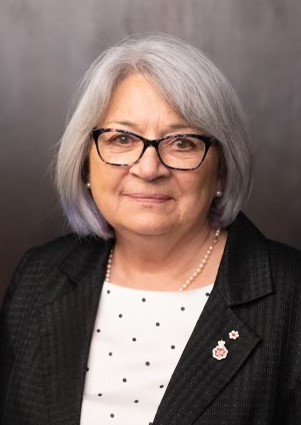
Mary Simon’s life has been a bridge between worlds, a testament to the power of diplomacy and the resilience of the human spirit. Born in Nunavik to an Inuk mother and a father of English descent, she grew up navigating the complexities of Canadian identity long before she entered the international stage. Her "primary power" is a form of constitutional diplomacy that is both firm and empathetic, allowing her to advocate for the rights of her people while building the consensus necessary for national progress. On July 26, 2021, she made history as the first Indigenous person to be appointed Governor General of Canada, a role that represents the culmination of a lifetime dedicated to public service and reconciliation.
Throughout her career, Simon has been a central figure in the most significant transformations of the Canadian state. From the negotiation of historic land claims to the repatriation of the Constitution, her fingerprints are on the foundational documents of the modern nation. She has served as an ambassador, a negotiator, and a leader of international organizations, always with a focus on the Arctic and the rights of the Inuit. Her voice is one of quiet authority, a reminder that the most profound changes often begin with a conversation and a willingness to listen. As the representative of the Crown, she now occupies a unique position from which to guide the country toward a more inclusive and equitable future.
The Life of the North
Mary Jeannie May Simon was born on August 21, 1947, in Kangiqsualujjuaq, a small community on the shores of Ungava Bay in Nunavik, northern Quebec. Her childhood was a blend of traditional Inuit values and the influence of the southern world. Her father, Bob May, was a manager for the Hudson's Bay Company, and her mother, Nancy, was a respected Inuk woman who ensured that her children remained deeply connected to their heritage. Mary grew up speaking Inuktitut and English, a bilingualism that would later become a hallmark of her diplomatic career. She spent her early years on the land, learning the skills of survival and the rhythms of the Arctic seasons, experiences that instilled in her a profound respect for the environment and the wisdom of her elders.
The education system of the time was a site of both opportunity and trauma for Indigenous children. Mary attended a federal day school in Fort Chimo (now Kuujjuaq), where she was forced to navigate the tensions between the Western curriculum and her Inuit identity. Unlike many of her contemporaries who were sent to residential schools, she was able to remain with her family, a factor she credits with providing her with a stable foundation. Her professional life began in the early 1970s as a broadcast journalist with CBC North. In this role, she travelled extensively across the Arctic, documenting the lives of her people and the challenges they faced as the southern world increasingly encroached on their traditional territories. This experience gave her a deep understanding of the diverse perspectives within the Inuit community and prepared her for the political battles that lay ahead.
By the mid-1970s, the Inuit of northern Quebec were facing a massive challenge: the James Bay and Northern Quebec Hydroelectric Project. This massive development threatened to flood vast areas of traditional hunting grounds without the consent or compensation of the Indigenous people. Mary Simon stepped into the fray as a negotiator for the Northern Quebec Inuit Association. She was part of the team that negotiated the James Bay and Northern Quebec Agreement (1975), Canada’s first "modern" land claims treaty. This agreement was a landmark in Canadian history, establishing the Makivik Corporation and providing the Inuit with a degree of self-governance and economic independence that was previously unimaginable. It was here that Mary first demonstrated her "Primary Power" of diplomatic persistence, a trait that would define her career for the next fifty years.
Architect of Modern Canada
Simon was a central figure in the constitutional negotiations that defined modern Canada. During the 1980s, she was a senior negotiator for the Inuit Committee on National Issues, working alongside other Indigenous leaders to ensure that their rights were protected in the new Canadian Constitution. Her work was critical in securing Section 35 of the Constitution Act, 1982, which recognizes and affirms the Aboriginal and treaty rights of Indigenous peoples. This was not a simple task; it required months of intense lobbying and a sophisticated understanding of the Canadian political landscape. During the subsequent Charlottetown Accord negotiations, her contributions were so significant that she was dubbed one of the "Mothers of Confederation"—a recognition of her role in codifying the inherent right to Indigenous self-government.
In a famous televised exchange in 1984, Simon challenged Prime Minister Pierre Elliott Trudeau on the issue of gender equality and the status of Indigenous women under the law. She firmly asserted her equality and the rights of all Inuit women, refusing to be sidelined by the Prime Minister's dismissive remarks. It was a moment that established her as a formidable force in Canadian public life, proving that reconciliation requires both diplomacy and unwavering resolve. For Mary, the Constitution was not just a legal document; it was a promise that Canada would finally recognize the first peoples of the land as equal partners in the federation. Her success in these negotiations laid the groundwork for the modern relationship between the Crown and Indigenous peoples.
Bridging the Ice Curtain
As President of the Inuit Circumpolar Council (ICC) from 1986 to 1992, Simon performed a feat of "Ice Curtain" diplomacy that resonated far beyond the Arctic. During the final years of the Cold War, the Arctic was a highly militarized zone, and communication between Inuit in the West and the Soviet Union was almost non-existent. Simon successfully negotiated with the Soviet government to allow Russian Inuit to join the ICC, uniting Inuit across the entire circumpolar North for the first time in generations. This was a triumph of cultural diplomacy, proving that shared heritage and common environmental concerns could transcend the ideological divides of the era.
In 1994, Prime Minister Jean Chrétien appointed Mary Simon as Canada’s first-ever Ambassador for Circumpolar Affairs. In this role, she became the primary architect of the Arctic Council, an international forum for Arctic governments and Indigenous peoples. She ensured that Indigenous peoples were included as "Permanent Participants," a status that allows Indigenous voices to sit at the table alongside national governments—a unique arrangement in international law. Her work helped to shift the global focus on the Arctic from military security to environmental protection and sustainable development. She later served as Canada's Ambassador to Denmark (1999–2002), further solidifying her reputation as one of the country's most capable and respected diplomats.
The Sovereign Legacy
The appointment of Mary Simon as the 30th Governor General of Canada in 2021 was a moment of profound symbolic and practical importance. As the first Indigenous person to hold the position, she embodies the complex and evolving relationship between the Crown and the first peoples of Canada. Her installation ceremony was marked by the use of Inuktitut and the lighting of the Qulliq, traditional elements that signaled a new era for the office. In her role, she has prioritized reconciliation, mental health, and the promotion of Indigenous languages. She understands that her position is not just about ceremony, but about using her platform to foster understanding and unity in a country that is still coming to terms with its colonial past.
Mary Simon’s legacy is one of "Sovereign Leadership"—the idea that true authority comes from a deep connection to the land and a commitment to the well-being of the community. She has received numerous awards, including the Order of Canada and the National Aboriginal Achievement Award, but her true achievement is the path she has cleared for others. She has proven that an Inuk woman from a remote community can reach the highest office in the land without sacrificing her identity or her values. Her life is a reminder that the story of Canada is still being written, and that the voices of the North are an essential part of its future. Through her work, she has ensured that the "Ice Curtain" has been replaced by a bridge of cooperation and respect.
Notable Quotes
"Reconciliation is a way of life and requires work every day. It is a continuous process of learning and unlearning."
— Mary Simon, Installation Speech
"My appointment is a historic and inspirational moment for Canada and an important step on the long path towards reconciliation."
— Mary Simon
"The Arctic is a barometer for the world’s environmental health. What happens in the North affects us all."
— Mary Simon
Operational Timeline
Origin
Born in Kangiqsualujjuaq, Nunavik. Raised in a bilingual household bridging Inuit and English cultures.
Journalism
Begins her career as a CBC North journalist, documenting the lives of Inuit communities across the Arctic.
James Bay Agreement
Negotiates Canada's first modern land claims treaty, establishing self-governance for the Inuit of northern Quebec.
Constitutional Success
Secures Section 35 of the Constitution Act, recognizing the Aboriginal and treaty rights of Indigenous peoples.
ICC President
Elected President of the Inuit Circumpolar Council, leading international efforts to unite Inuit across the North.
Ambassadorship
Becomes the first Inuk to hold an ambassadorship, serving as Canada's Ambassador for Circumpolar Affairs.
Arctic Council
Helps found the Arctic Council, ensuring Indigenous peoples have a permanent seat at the table.
Ambassador to Denmark
Appointed Canada's Ambassador to Denmark, strengthening ties across the North Atlantic.
ITK Leadership
Elected President of Inuit Tapiriit Kanatami, the national voice of Inuit in Canada.
Installation
Sworn in as the 30th Governor General of Canada, the first Indigenous person to represent the Crown.
Continuing Service
Remains a vital leader in the national conversation on reconciliation and the future of the Arctic.