Technical Portrait 023
Michael Smith
The molecular architect who handed humanity the scalpel to edit the building blocks of life itself.
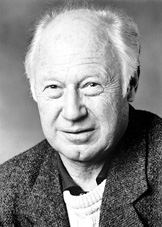
Before 1978, the genetic code was largely seen as a locked manuscript. Scientists could read it, and they could observe what happened when nature made a random typo, but they could not deliberately rewrite it. Dr. Michael Smith changed that forever. By inventing a technique that allowed scientists to alter specific sequences of DNA at will, he didn't just advance molecular biology—he fundamentally reprogrammed its future. His "primary power" was a molecular precision that gave humanity the first true scalpel for the genome, turning the theoretical potential of genetic engineering into a clinical reality.
Born into a working-class family in Blackpool, England, Smith emigrated to Canada in 1956 to take up a post-doctoral fellowship in British Columbia. He arrived with a fierce intellect and an unassuming demeanor, eventually establishing himself at the University of British Columbia (UBC). It was there, amidst the quiet focus of his laboratory, that he tackled the most complex chemical puzzles of his era. Over the next four decades, he would become one of Canada's most celebrated scientists, a Nobel laureate who remained more interested in the collaborative progress of the lab than in the accolades of the academy. His legacy is one of both scientific brilliance and extraordinary human generosity.
The Life of a Working-Class Chemist
Michael Smith was born on April 26, 1932, in the seaside town of Blackpool, England. His father was a market gardener and his mother a hard-working woman who instilled in him a pragmatic, no-nonsense approach to life. In an era when higher education was often reserved for the elite, Michael’s academic journey was fueled by scholarships and an insatiable curiosity about how things were put together at the most fundamental level. He attended the University of Manchester, where he earned both his BSc and his PhD in chemistry. It was during these years that he developed the rigorous analytical skills that would later allow him to untangle the complexities of DNA. Yet, despite his academic success, he always felt a certain distance from the traditional British establishment, a restlessness that eventually led him to look toward the horizon.
In 1956, Smith took a leap of faith and emigrated to Vancouver to work in the laboratory of Har Gobind Khorana at the University of British Columbia. Khorana, who would later win a Nobel Prize himself, was working on the chemical synthesis of nucleotides—the building blocks of DNA and RNA. For Michael, this was a transformative period. Vancouver was a frontier in more ways than one, and the freedom of the Canadian scientific community allowed him to experiment and fail without the stifling weight of tradition. He found in Khorana a mentor who shared his belief that chemistry was the key to unlocking the mysteries of biology. Together, they pushed the boundaries of what was possible in the lab, developing the foundational techniques that would eventually lead to the genetic revolution of the 1970s.
Smith’s integration into the Canadian scientific community was seamless. He became a Canadian citizen in 1963 and spent the rest of his career at UBC, rising through the ranks to become a professor of biochemistry and the director of several major research institutes. He was known as a "chemist’s chemist," a man who loved the raw data and the meticulous work of the bench. Yet, he was also a visionary leader who understood that science could not exist in a vacuum. He was a vocal advocate for public funding of research and a tireless mentor to generations of students, many of whom would go on to lead their own labs across the country. For Michael, the laboratory was a family, and the pursuit of knowledge was a collective endeavor that required both individual brilliance and selfless cooperation.
The Work: Site-Directed Mutagenesis
Smith’s crowning achievement was the development of site-directed mutagenesis, a discovery that fundamentally changed the course of biological research. In simple terms, he figured out how to use short, custom-built strands of DNA (oligonucleotides) to seek out a specific gene and alter a single letter in its genetic code. Before Smith’s breakthrough in 1978, scientists had to rely on random mutations caused by chemicals or radiation—a process that was imprecise and often destructive. Smith’s method allowed for "precision editing," giving researchers the ability to change a single amino acid in a protein and observe the resulting effect on its function. This was the molecular equivalent of being able to change one specific brick in a skyscraper to see how it affected the stability of the entire building.
The impact of this discovery was immediate and profound. It allowed scientists to map the active sites of enzymes, understand the genetic basis of hereditary diseases, and engineer new proteins for medical and industrial use. It laid the groundwork for the development of targeted cancer therapies, the creation of synthetic insulin, and the entire field of protein engineering. In 1993, Smith was awarded the Nobel Prize in Chemistry for this work, sharing the honor with Kary Mullis, the inventor of the Polymerase Chain Reaction (PCR). While Mullis’s work allowed for the amplification of DNA, Smith’s work allowed for its precise modification. Together, they provided the two most powerful tools in the modern molecular biologist's toolkit.
Beyond the technical achievement, Smith’s work represented a philosophical shift in biology. He moved the field from a descriptive science—observing what nature had created—to a constructive one, where scientists could actively participate in the design and optimization of biological systems. This "engineering" mindset is now the bedrock of the global biotechnology industry. Yet, Michael remained humble about his contribution, often describing his breakthrough as a "logical extension" of existing chemical principles. He was more interested in what others would do with the tool he had created than in the tool itself.
The Legacy: The Generous Genius
What Michael Smith did with his Nobel Prize money cemented his legacy as one of Canada's greatest humanitarians. He donated the entire prize—roughly $500,000—to support researchers in schizophrenia, to the Society for Canadian Women in Science and Technology (SCWIST), and to science outreach programs for children. This was not a calculated PR move; it was a sincere reflection of his values. He believed that those who were "lucky" enough to achieve success had a moral obligation to help those who were struggling. His donation to SCWIST, in particular, was ahead of its time, highlighting the systemic barriers faced by women in science and providing the resources to help overcome them.
Smith was also a master builder of institutions. He was the founding director of the Biotechnology Laboratory at UBC (now the Michael Smith Laboratories) and played a crucial role in establishing the BC Cancer Agency's Genome Sciences Centre. He understood that for Canada to be a leader in the genetic age, it needed world-class infrastructure and a culture of collaboration. He worked tirelessly to bridge the gap between academia and industry, ensuring that scientific discoveries could be translated into real-world medical treatments. His vision transformed Vancouver into a global hub for biotechnology, a legacy that continues to thrive decades after his death.
Dr. Michael Smith proved that unparalleled scientific genius could coexist with extraordinary modesty and generosity. He gave the world the tools to rewrite DNA, and he gave his country the resources and the inspiration to ensure that the next generation of scientists could continue the work. He was a man who understood that the true measure of a life is not found in the prizes one wins, but in the doors one opens for others. His name remains a symbol of scientific excellence and selfless service, a reminder that the most powerful discoveries are those that are shared for the benefit of all humanity.
Notable Quotes
"Science is a cooperative effort. You don't do it on your own. You do it with other people, and you do it for other people."
— Michael Smith
"I am very lucky that my hobby is also my profession. I get paid for doing what I love."
— Michael Smith
"The true value of research is found in the way it improves the lives of others, not in the accolades it brings to the researcher."
— Michael Smith
Operational Timeline
Origin
Born in Blackpool, England. Raised in a working-class environment that emphasized hard work and practical problem-solving.
Arrival in Canada
Emigrates to Vancouver to work with Har Gobind Khorana at UBC, beginning a lifelong association with Canadian science.
Professor at UBC
Appointed Professor of Biochemistry at the University of British Columbia, where he would spend the rest of his career.
The Breakthrough
Publishes the foundational paper detailing the method of site-directed mutagenesis, enabling precision DNA editing.
UBC Biotechnology
Founds the Biotechnology Laboratory at UBC, providing a hub for interdisciplinary research and innovation.
The Nobel Prize
Awarded the Nobel Prize in Chemistry. He immediately announces his intention to donate all of the prize money to charity.
Genome Sciences Centre
Instrumental in establishing the BC Cancer Agency’s Genome Sciences Centre in Vancouver.
Final Farewell
Michael Smith passes away in Vancouver on October 4, leaving behind a profound scientific and philanthropic legacy.
Enduring Honor
The Michael Smith Foundation for Health Research is established, continuing his commitment to scientific excellence in Canada.