Technical Portrait 052
Murray Sinclair
The jurist who made Canada listen to testimony it could no longer avoid.
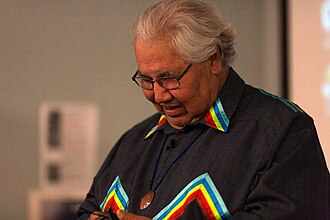
Murray Sinclair belongs in the Supers collection because he helped Canada hear truths it had long avoided. As an Anishinaabe judge, senator, and chair of the Truth and Reconciliation Commission, he became one of the central public voices explaining the residential school system, its harms, and the responsibilities that follow from testimony.
His importance is not based on volume or performance. Sinclair's authority often comes from patience: the willingness to listen carefully, speak precisely, and place painful evidence inside a moral and legal frame that the country cannot easily dismiss.
The Canadian Identity
His Canadian identity is Indigenous, legal, and constitutional. Born in Manitoba and a member of Peguis First Nation, Sinclair entered Canadian law from a position shaped by Indigenous experience and by the need to make institutions answer to histories they helped create. His career shows both the limits and the possibilities of working inside Canadian systems.
Sinclair also represents a different model of national leadership. He did not ask Canada to feel briefly sorry. He asked it to understand relationships: treaties, children, churches, governments, languages, families, records, and obligations. That relational understanding is central to any serious Canadian identity.
The Achievement
The Truth and Reconciliation Commission was a massive historical and civic undertaking. It gathered testimony from survivors, documented patterns of abuse and cultural destruction, and issued Calls to Action that continue to shape public debate. Sinclair's chairmanship required legal discipline, emotional steadiness, and deep respect for people telling the hardest stories of their lives.
His achievement also includes a career of firsts and service in Manitoba's justice system. But the TRC gave his work national scale. It changed public language: reconciliation, residential schools, survivor testimony, and Calls to Action became part of everyday Canadian discussion in a new way.
The Legacy
Sinclair's legacy is unfinished because reconciliation is unfinished. That is part of why his profile matters. He is not a figure who lets Canada close the book. He is a figure who teaches that listening creates duties. The record exists; the question is what institutions and citizens do with it.
For the Supers collection, Sinclair represents moral courage expressed through procedure, law, and testimony. His power is not spectacle. It is the disciplined conversion of memory into public obligation.
Operational Timeline
Born near Selkirk
Born near Selkirk, Manitoba, and later connected to Peguis First Nation, grounding his life in Indigenous Manitoba.
Appointed Manitoba's first Indigenous judge
Appointed Manitoba's first Indigenous judge, marking a major step in Canadian legal representation.
Serves in major public inquiries
Serves in major public inquiries, building a reputation for careful legal leadership on difficult issues.
Becomes chair of the Truth and Reconciliation Commission of Canada
Becomes chair of the Truth and Reconciliation Commission of Canada.
Helps release the TRC final report and Calls to Action
Helps release the TRC final report and Calls to Action, creating a national framework for reckoning and responsibility.
Appointed to the Senate of Canada
Appointed to the Senate of Canada, bringing his legal and reconciliation work into federal public life.
Continues as an influential public voice on truth
Continues as an influential public voice on truth, reconciliation, justice, and institutional responsibility.