Technical Portrait 027
Nellie McClung
The sharp-witted orator who dismantled the political patriarchy with a pen, a stage, and an unyielding demand for equality.
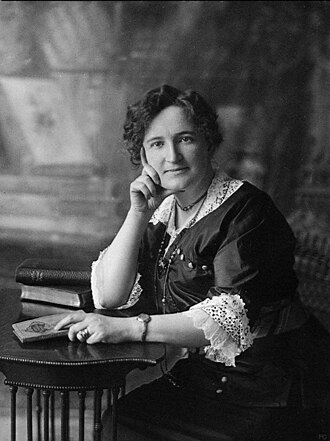
Political change rarely occurs through polite request. It is usually forged by individuals willing to endure ridicule to expose hypocrisy. Nellie McClung was armed with a formidable intellect, devastating comedic timing, and a profound sense of justice. At a time when women were legally classified alongside children and "idiots," she mounted a relentless, public campaign to secure the female franchise in Canada. Her "primary power" was an unmatched oratorical wit that could dismantle the most entrenched patriarchal arguments with a single, sharp-edged joke.
Born in Ontario and raised in rural Manitoba, McClung initially gained fame as a bestselling novelist. Her first book, Sowing Seeds in Danny (1908), was a massive success, providing her with a national platform and the financial independence to pursue her true calling: social reform. She saw firsthand the devastating effects of the lack of property rights for women and the ravages of alcoholism on families, driving her into the temperance and suffrage movements. Over the next four decades, she would become the most recognizable face of Canadian feminism, a woman who understood that "never retract, never explain, never apologize—get the thing done and let them howl" was the only way to move a nation forward.
The Life of the Prairie Reformer
Nellie Letitia Mooney was born on October 20, 1873, in Chatsworth, Ontario, the youngest of six children. Her family moved to the Souris Valley in Manitoba in 1880, seeking the promise of the western frontier. This early life on the prairies was one of both hardship and immense freedom. Nellie did not attend formal school until she was ten years old, spending her early years learning the rhythms of the land and the stories of the community. This delay in education did not hinder her; she was a precocious student who developed a deep love for literature and a sharp critical eye for the social structures around her. By the age of sixteen, she had earned her teaching certificate and was working in various rural schools, where she witnessed the systemic inequalities that limited the lives of the women she met.
In 1896, she married Wesley McClung, a pharmacist whose supportive and progressive nature allowed Nellie to continue her public life at a time when marriage often meant the end of a woman’s career. The couple moved to Winnipeg in 1911, a city that was then a boiling pot of social and political activism. It was here that Nellie truly found her voice. She joined the Women's Christian Temperance Union (WCTU) and the Political Equality League, organizations that were pushing for everything from better working conditions in factories to the right of women to vote. Nellie’s talent for public speaking was quickly recognized; she had a unique ability to use humor and common-sense logic to make the most radical ideas seem inevitable. She was a woman of the people, a mother of five who could speak to both the kitchen table and the legislative chamber with equal ease.
McClung’s life was defined by a restless energy and a refusal to accept the status quo. She was a prolific writer, producing sixteen books and hundreds of articles that blended fiction with social commentary. Her work was instrumental in creating a distinct Canadian "prairie realism," focusing on the domestic lives of women and the importance of community solidarity. Yet, her primary focus remained the political arena. She was a tireless campaigner, travelling thousands of miles by train to speak in small-town halls and drafty schoolrooms. She understood that for women to truly be free, they needed more than just the vote; they needed legal recognition, economic independence, and a seat at the table where the laws of the nation were written. For Nellie, the fight for suffrage was not just about the ballot box; it was about the fundamental dignity of the human person.
The Mock Parliament
McClung's most brilliant tactical maneuver occurred in 1914, an event that has become legendary in Canadian political history. At the time, the Conservative government of Manitoba, led by Premier Sir Rodmond Roblin, was staunchly opposed to women’s suffrage. Roblin famously dismissed the suffragists as "short-haired women and long-haired men," arguing that the vote would break up homes and lead to social chaos. In response, McClung and the Political Equality League staged a "Mock Parliament" at the Walker Theatre in Winnipeg. The premise was simple but devastating: the gender roles were reversed, and McClung played the role of the Premier, receiving a delegation of men who were pleading for the right to vote.
Expertly satirizing Roblin’s patronizing arguments, McClung debated whether men should be allowed to vote, suggesting that their "emotional nature" and "tendency to resort to violence" made them unsuitable for the franchise. "We wish to spare you the grease and grime of politics," she told the men, mimicking Roblin’s own words to the delight of the sold-out crowd. The performance was a sensation, deeply humiliating the government and exposing the absurdity of anti-suffrage arguments through the power of laughter. It turned the tide of public opinion in Manitoba, and in 1916, due largely to the momentum created by the Mock Parliament, Manitoba became the first province in Canada to grant women the right to vote. The prairie provinces quickly followed suit, signaling the beginning of a new era in Canadian democracy.
The Persons Case and the Famous Five
Securing the vote was only the beginning of McClung’s political journey. In 1921, she moved to Alberta and was elected as a Liberal Member of the Legislative Assembly (MLA) for Edmonton. During her time in office, she pushed for the Dower Act, which protected women’s property rights, and fought for improved public health and education services. However, she soon found herself part of a much larger legal battle. Alongside four other prominent Alberta women—Emily Murphy, Henrietta Muir Edwards, Louise McKinney, and Irene Parlby—she formed what would become known as the "Famous Five." Their goal was to challenge the narrow legal interpretation of the word "persons" in the British North America Act, which was being used to prevent women from being appointed to the Canadian Senate.
The **Persons Case** was a landmark legal struggle that spanned several years. In 1928, the Supreme Court of Canada initially ruled against the women, stating that the word "persons" did not include women when the Act was originally written. Undeterred, the Famous Five took their case to the Judicial Committee of the Privy Council in London, which was then the highest court of appeal for Canada. In 1929, the Council reversed the decision, famously stating that "the exclusion of women from all public offices is a relic of days more barbarous than ours." This victory was about much more than a seat in the Senate; it was a fundamental recognition that the law must evolve to reflect changing social realities. Nellie McClung did not just fight for women to participate in the democratic process; she fought to redefine the legal concept of humanity in Canada.
The Complex Legacy of a Crusader
Nellie McClung’s impact on Canada is immeasurable, but her legacy is also marked by the complexities of her time. Like many social reformers of the early 20th century, she was a supporter of eugenics, believing that the "improvement" of the human race through selective breeding was a necessary step toward a better society. This support led to the passage of the Sexual Sterilization Act in Alberta in 1928, a dark chapter in Canadian history that resulted in the forced sterilization of thousands of marginalized individuals. While this aspect of her work is rightfully condemned today, it is essential to understand it within the context of the broader "social gospel" movement that sought to use scientific and social engineering to solve the problems of the industrial age.
Despite these controversies, McClung remains a foundational figure in the history of Canadian human rights. She was a pioneer who broke down doors that had been locked for centuries, proving that a woman’s place was wherever she chose to be. She was the first woman to serve on the Board of Governors of the Canadian Broadcasting Corporation and a Canadian delegate to the League of Nations in 1938. She spent her final years in Victoria, British Columbia, continuing to write and advocate for social justice until her death in 1951. Her name is immortalized in monuments across the country, but her true memorial is the millions of Canadian women who now exercise the rights she fought so hard to secure. She was the "Voice of the Vote," a woman who understood that the only way to change the world is to let them howl while you get the thing done.
Notable Quotes
"Never retract, never explain, never apologize - get the thing done and let them howl."
— Nellie McClung
"Women are going to form a chain, a greater sisterhood than the world has ever known of."
— Nellie McClung
"The time will come when women will no longer be considered as a separate class, but as individuals with the same rights and responsibilities as men."
— Nellie McClung
"A woman's place is in the home, but she shouldn't have to stay there."
— Nellie McClung
Operational Timeline
Origin
Born in Chatsworth, Ontario. Moves to rural Manitoba in 1880, growing up in the Souris Valley.
Partnership
Marries Wesley McClung, a pharmacist who supports her public career and social activism.
Literary Bestseller
Publishes 'Sowing Seeds in Danny', which becomes a massive national success and establishes her platform.
Winnipeg Activism
Moves to Winnipeg, joining the Political Equality League and becoming a key voice in the suffrage movement.
The Mock Parliament
Stages the legendary satire at the Walker Theatre, turning public opinion in favor of women's suffrage.
Suffrage Victory
Manitoba becomes the first province to grant women the right to vote, a landmark moment in Canadian democracy.
Elected Office
Moves to Alberta and is elected as a Liberal MLA for Edmonton, serving until 1926.
The Famous Five
Joins four other women to launch the Persons Case, challenging the legal definition of 'persons' in Canada.
Legal Personhood
Achieves victory in the Persons Case, ensuring women can be appointed to the Canadian Senate.
League of Nations
Serves as a Canadian delegate to the League of Nations in Geneva, advocating for global peace and cooperation.
Final Farewell
Nellie McClung passes away in Victoria, BC, leaving an indelible mark on the history of Canadian human rights.