Sport & Swimming 010
Penny Oleksiak
Olympian. Record-breaker. The face of a new era whose explosive closing speed redefined Canadian amateur sport.
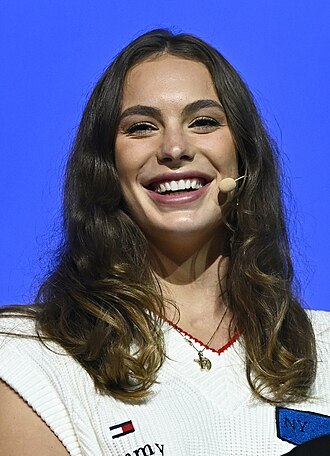
Penny Oleksiak didn't just win; she arrived like a tidal wave, sweeping across the international swimming world and redefining what it means to be a Canadian athlete. In 2016, as a sixteen-year-old in Rio de Janeiro, she became the first Canadian to win four medals in a single Summer Games, a feat that included a historic gold in the 100m freestyle. Her "primary power" is an explosive closing speed that seems to defy the laws of physiology, a late-race surge that has seen her out-touch the world's most seasoned sprinters in the final meters. As Canada’s most decorated Summer Olympian, her legacy is not just one of metal and records, but of a fearless, cool-headed approach to competition that has inspired a new generation of swimmers to believe that they, too, can conquer the world.
Born into an elite athletic family in Toronto, Oleksiak possesses a rare combination of biomechanical advantage and mental toughness. Standing 6'1" with a wingspan that allows her to pull a massive volume of water, she is built for speed, yet it is her poise under pressure that truly sets her apart. She has navigated the transition from teenage prodigy to veteran leader with remarkable grace, using her platform to advocate for mental health and the importance of finding joy in the pursuit of excellence. Whether she is anchoring a relay or hunting down a lead in an individual final, Penny Oleksiak remains the face of a new, assertive era in Canadian amateur sport—a competitor who doesn't just hope for the best, but expects it.
The Life of a Natural Born Athlete
Penny Oleksiak was born on June 13, 2000, into a household where high-performance sport was the norm. Her father, Richard, played basketball and football, and her mother, Alison, was a competitive swimmer. Her older brother, Jamie, is a veteran NHL defenseman, and her sister, Hayley, was a world-class rower at Northeastern University. Growing up in the Toronto neighborhood of Beaches, Penny was a naturally active child, but she didn't initially gravitate toward the pool. She experimented with gymnastics, dance, and competitive skating before finally deciding to take swimming seriously at the relatively late age of nine. Even then, her path was not immediate; she was famously rejected by several local swim clubs because she was "too tall and too uncoordinated," a critique that seems absurd in retrospect but one that fueled her early competitive drive.
She eventually found a home at the Toronto Swim Club and later trained at the High Performance Centre - Ontario under the guidance of coach Ben Titley. It was here that her raw potential was transformed into world-class skill. Titley recognized that Penny was not a traditional "grinder"; she was a racer who thrived on the energy of the competition. Her training was meticulously designed to maximize her natural efficiency and her remarkable ability to recover between races. By the age of fifteen, she was already breaking national age-group records, but it was her performance at the 2015 World Junior Swimming Championships in Singapore—where she won six medals—that signaled her readiness for the senior international stage. Despite her rapid rise, Penny remained a typical teenager, famous for her love of her dog, her affinity for Drake’s music, and a refreshing lack of pretension that endeared her to fans and teammates alike.
The pressure of the Olympic year can break even the most experienced athletes, but Oleksiak seemed to thrive in the spotlight. She qualified for the Rio 2016 Games in multiple events, setting Canadian records along the way. While the media began to buzz about her potential, she remained focused on the simple mechanics of her race. "I try not to think about the medals," she said at the time. "I just want to see how fast I can go." This ability to compartmentalize the expectations of a nation and focus on the black line at the bottom of the pool would become her greatest psychological asset. She arrived in Rio not as a favorite, but as a dark horse—a teenager with nothing to lose and everything to gain.
The Work: Rio and the Tokyo Legacy
The defining moment of Oleksiak’s career occurred on the evening of August 11, 2016, in the final of the 100m freestyle. At the 50-meter turn, she was in 7th place, nearly a full second behind the world record pace. While the world's best sprinters began to fade in the return leg, Oleksiak engaged her legendary closing speed, swimming the second half in a staggering 27.00 seconds—the fastest in the field. In the final 15 meters, she employed a "head-down" strategy, refusing to breathe to eliminate drag, and out-touched the field to tie for gold with Simone Manuel of the United States. It was the first time a Canadian had won a gold medal in the pool since 1992, and Penny’s reaction—a look of pure, wide-eyed shock—became one of the most iconic images of the Games. She left Rio with four medals: gold in the 100m freestyle, silver in the 100m butterfly, and two bronze medals in the relays.
Four years later, at the delayed Tokyo 2020 Games, Oleksiak proved that Rio was no fluke. She arrived as a veteran leader of the Canadian team, carrying the weight of being the nation’s premier summer athlete. In Tokyo, she displayed a new level of tactical maturity. She anchored the 4x100m freestyle relay to a silver medal and won a bronze in the 200m freestyle, setting a new Canadian record in the process. With her bronze medal in the 4x100m medley relay, she officially surpassed Victor Davis, Lesley Thompson-Willie, and Phil Edwards to become the most decorated Summer Olympian in Canadian history with seven medals. Her performance in Tokyo was a masterclass in consistency and grit, as she navigated a grueling schedule and a highly competitive field to secure her place in the pantheon of Canadian sports legends.
Technical Efficiency
Standing 6'1", Oleksiak’s technique is a study in biomechanical efficiency. She utilizes a high-elbow catch, allowing her to engage her large muscle groups—the lats and pectorals—and pull a massive volume of water early in the stroke. Unlike many high-frequency sprinters who rely on a rapid, windmill-like arm turnover, Oleksiak uses her long wingspan to maximize distance per stroke. She glides further with each pull, a style that conserves energy for her trademark finish. Her large hands act like natural paddles, creating a powerful "anchor" in the water that resists breakdown even under extreme physiological stress. This efficiency is what allows her to maintain her speed when others are slowing down, turning the final ten meters of any race into "Penny time."
The Enduring Legacy
Penny Oleksiak’s impact on Canadian sport transcends her medal count. She is credited with sparking "The Penny Effect"—a surge in interest and participation in competitive swimming across the country. Her success forced a re-evaluation of how Canada supports its amateur athletes, leading to increased funding and better facilities for the next generation of stars. Beyond the pool, she has become a powerful advocate for mental health, speaking openly about the challenges of life in the public eye and the importance of seeking help. She has proven that it is possible to be a fierce, world-class competitor while remaining a compassionate and grounded human being.
As she prepares for the next phase of her career, Oleksiak remains a central figure in the Canadian Olympic movement. She has endured injuries and setbacks, including knee surgery in 2022, but her commitment to the sport remains unwavering. Her legacy is one of breaking barriers—legal, social, and physical. She has shown that a young woman from Toronto can take on the world’s best and come out on top, and she has done it with a smile and a shrug. Penny Oleksiak is more than just a swimmer; she is a symbol of a modern, confident Canada, a nation that is no longer content to just participate, but one that is ready to lead. Her story is a reminder that the greatest records are those that are broken with joy and the greatest legacies are those that empower others to find their own "explosive speed."
Notable Quotes
"I try not to think about the pressure or the expectations. I just want to swim my own race and see where that takes me."
— Penny Oleksiak
"I just love racing. There's nothing like that feeling of being in the water and knowing you've given it everything you have."
— Penny Oleksiak
"It’s okay to not be okay. We need to talk more about the mental side of sports, not just the physical."
— Penny Oleksiak
Operational Timeline
Origin
Born in Toronto to a family of elite athletes. Surrounded by a culture of competition and excellence from birth.
First Laps
Begins competitive swimming after experimenting with other sports. Joins the Toronto Swim Club.
Junior World Domination
Wins six medals at the World Junior Swimming Championships, announcing her arrival as a world-class talent.
The Rio Breakthrough
Wins four medals at the Rio Olympics, including gold in the 100m freestyle. Becomes a national hero at age sixteen.
Lou Marsh Award
Named Canada’s top athlete of the year, receiving the Lou Marsh Trophy and the Bobbie Rosenfeld Award.
World Championships
Wins two relay medals at the World Aquatics Championships in Budapest, solidifying her status as a core member of the national team.
Tokyo Legacy
Wins three more medals at the Tokyo Olympics, becoming the most decorated Summer Olympian in Canadian history.
Resilience
Undergoes knee surgery and begins a long process of rehabilitation, demonstrating the mental toughness of a champion.
Ambassadorship
Serves as a mentor for Swimming Canada and a leading advocate for mental health and athlete well-being.