Technical Portrait 030
Rick Hansen
The athlete who circled the globe in a wheelchair, refusing to accept the limits a fractured spine supposedly placed upon his life.
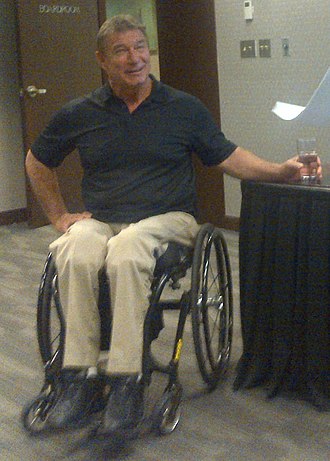
At fifteen years old, Rick Hansen was a promising athlete in British Columbia whose life was violently derailed. While riding in the back of a pickup truck, he was thrown in a crash that severed his spinal cord, leaving him paralyzed from the waist down. In the 1970s, society viewed such an injury as the end of an active life. Hansen refused the narrative, embarking on a physical and philosophical journey that would rewrite global perceptions of disability. His story is not merely one of survival, but of a deliberate and relentless pursuit of excellence that challenged the very foundations of how the world defines "ability."
Hansen’s journey from a hospitalized teenager to a global icon was marked by moments of profound darkness and unexpected light. In the immediate aftermath of his accident, he faced a world that seemed to have suddenly shrunk. The activities that defined his youth—volleyball, baseball, and fishing in the rugged wilderness of British Columbia—now seemed like relics of a past life. Yet, it was within the sterile walls of rehabilitation centers that Hansen’s competitive fire was rekindled. He realized that while his legs no longer functioned, his heart, mind, and ambition remained entirely intact. This realization became the catalyst for a career that would span decades and change millions of lives.
The Early Life & The Pivot
Born Richard Marvin Hansen on August 26, 1957, in Port Alberni, British Columbia, Rick was raised in a family that valued hard work and the great outdoors. His father and grandfather were avid fishermen, and some of Rick’s fondest early memories involved navigating the coastal waters of BC. He was a natural athlete, excelling in every sport he touched. By the time he reached his mid-teens, he was a standout in high school sports, dreaming of a career in professional athletics or physical education. The accident in June 1973 changed the trajectory of those dreams, but it did not extinguish them.
The transition to life in a wheelchair was anything but easy. Hansen often speaks of the "wall of attitude" he encountered—not just from others, but from within himself. He had to learn to navigate a world that was not built for him, filled with physical barriers like stairs and narrow doorways, and social barriers like low expectations and pity. His breakthrough came when he discovered wheelchair sports. Through the mentorship of coaches and fellow athletes, he learned that he could still compete at the highest levels. He enrolled at the University of British Columbia, eventually becoming the first person with a physical disability to graduate with a degree in Physical Education—a feat that required him to fight for his right to participate in the same practical courses as his able-bodied peers.
During his time at UBC, Hansen became a dominant force in wheelchair racing. He trained with a scientific precision that was ahead of its time, focusing on aerodynamics, nutrition, and psychological preparation. Between 1979 and 1984, he won 19 international wheelchair marathons and earned six medals across two Paralympic Games. He was at the top of his sport, yet he felt a growing sense of responsibility. He had seen the potential of athletes with disabilities, but he knew that most people in the world still saw only the chair. He needed a platform to change that perception on a global scale.
The Man In Motion World Tour
The inspiration for the Man In Motion World Tour came from several sources, most notably his friend Terry Fox. Watching Terry’s Marathon of Hope in 1980 had a profound impact on Hansen. He saw how one individual’s courage could unite a nation and raise millions for a cause. While Terry’s journey was cut tragically short, Hansen felt a calling to carry that torch forward, but with a global scope. He envisioned a tour that would cross continents, crossing borders and cultures to prove that the human spirit has no limits.
On March 21, 1985, Hansen began his epic journey. The scale of the task was staggering: 40,072 kilometres through 34 countries on four continents. In the early months, the tour struggled for attention and funding. In Europe and the Middle East, Hansen and his small support team often found themselves wheeling through indifference. But as he reached the Great Wall of China and the sprawling cities of Australia, the momentum began to build. He wasn't just a man in a wheelchair; he was an elite athlete performing a feat of endurance that few able-bodied people could even contemplate.
The physical toll was immense. Hansen wheeled the equivalent of two marathons every single day. He suffered from chronic shoulder strain, tendonitis, and pressure sores. He faced extreme weather, from the humid jungles of Southeast Asia to the freezing mountain passes of the Alps. Through it all, he maintained a mantra of "one stroke at a time." By the time he returned to North America, the Man In Motion Tour had become a global phenomenon. When he finally crossed the finish line in Vancouver on May 22, 1987, he had raised $26 million and, more importantly, had forced the world to look at disability through a lens of possibility rather than tragedy.
The Scientific Pursuit of Recovery
Hansen’s commitment to spinal cord research was not just about fundraising; it was about accelerating the pace of discovery. He understood that the complexity of the human nervous system required a collaborative, multi-disciplinary approach. Following the tour, he leveraged his global profile to bring together the world's leading researchers, doctors, and advocates. His goal was to bridge the gap between basic laboratory science and clinical application, ensuring that breakthroughs in the lab could actually improve the lives of people living with paralysis.
Under his leadership, the Rick Hansen Foundation has funded some of the most innovative research in the field. This includes work on neuroprotection—finding ways to limit damage in the hours following an injury—and neuroplasticity, which explores how the brain and spinal cord can reorganize and form new connections. He has also been a staunch advocate for the creation of a national spinal cord injury registry, which allows researchers to track patient outcomes and identify the most effective treatments. This data-driven approach has transformed Canada into a global hub for spinal cord excellence.
The Legacy of Accessibility
Perhaps Hansen’s most visible legacy is the transformation of the built environment. He realized that even if a cure for paralysis was found, people with disabilities would still be marginalized if they couldn't enter a building, use a restroom, or participate in the workforce. This led to the creation of the Rick Hansen Accessibility Certification™ (RHAC) program. It is a comprehensive rating system that evaluates the meaningful accessibility of buildings and sites, looking beyond basic building codes to ensure that spaces are truly inclusive for everyone.
His work has influenced legislation and urban planning across Canada and around the world. Today, the sight of ramps, automated doors, and accessible transit is often taken for granted, but much of this progress can be traced back to the awareness raised by the Man In Motion Tour. Hansen continues to push for a "barrier-free" world by 2030, an ambitious goal that aligns with international human rights standards. For Hansen, accessibility is not just about physical structures; it’s about creating a culture where everyone belongs and has the opportunity to contribute their talents.
Hansen’s impact also extends to the realm of education. Through his foundation’s school programs, millions of children have learned about the importance of inclusion and the potential of people with disabilities. He believes that by changing the attitudes of the next generation, we can ensure that the "wall of attitude" eventually crumbles for good. Rick Hansen remains an active and influential figure, serving as a reminder that a single individual’s determination can indeed set the world in motion.
Notable Quotes
"It’s not what happens to you, it’s what you do with it that counts."
— Rick Hansen
"There are no walls too big in life that can’t be climbed."
— Rick Hansen (Spoken on the Great Wall of China)
"The end is just the beginning."
— Rick Hansen (Reflecting on the conclusion of the World Tour)
"One stroke, one stroke led to another... I realized that I had to focus on the 'now' to survive the 'forever'."
— Rick Hansen
Operational Timeline
Origin
Born Richard Marvin Hansen in Port Alberni, BC. An active youth with a passion for all sports and the outdoors.
The Accident
Sustains a spinal cord injury in a truck accident at age 15, resulting in permanent paralysis from the waist down.
Academic Milestone
Enrolls at the University of British Columbia, beginning his journey to become the first PE graduate with a disability.
Paralympic Debut
Competes in the Arnhem Paralympics, winning gold in the 800m and 1500m wheelchair races.
Pan Am Excellence
Wins nine gold medals at the Pan American Wheelchair Games, solidifying his status as a world-class athlete.
Athlete of the Year
Shares the Lou Marsh Trophy for Canada's Athlete of the Year with hockey legend Wayne Gretzky.
Man In Motion Begins
Departs Vancouver on March 21 to wheel around the world, aiming to raise awareness and research funds.
The Return
Completes the 40,072 km tour on May 22, returning to Vancouver to a hero's welcome and $26 million raised.
Foundation Launch
Establishes the Rick Hansen Foundation to continue the work of removing barriers and funding spinal cord research.
Hall of Fame
Inducted into Canada's Sports Hall of Fame, recognizing his immense contributions to athletics and advocacy.
Olympic Flame
Carries the Olympic flame into BC Place during the Opening Ceremony of the Vancouver 2010 Winter Games.
Accessibility Launch
Launches the Rick Hansen Accessibility Certification program to standardize accessibility ratings for buildings.
The 2030 Vision
Advocates for a barrier-free Canada by 2030, leveraging new technologies and policy shifts to ensure full inclusion.