Technical Portrait 022
Roméo Dallaire
The commander who refused to abandon his post, transforming the world's most catastrophic failure into a lifelong crusade for humanity.
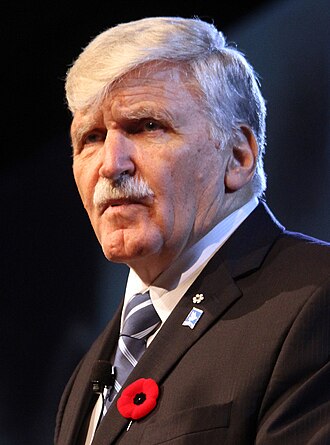
There are moments in history when the bureaucratic machinery of the world grinds to a halt, and morality is left resting on the shoulders of a single individual. In 1994, that burden fell upon Major-General Roméo Dallaire. As the Force Commander of the United Nations Assistance Mission for Rwanda (UNAMIR), he stood at the epicenter of one of the darkest chapters of the 20th century: the Rwandan Genocide. His experience is a searing testament to the consequences of international indifference and the resilience of the human spirit when faced with unimaginable evil.
Born on June 25, 1946, in Denekamp, Netherlands, Dallaire was the son of a Canadian sergeant and a Dutch nurse who had met during the liberation of the Netherlands in World War II. He immigrated to Canada as an infant and was raised in the francophone environment of Montreal’s east end. This dual heritage—Dutch and Canadian, English and French—gave him a unique perspective on identity and conflict from a young age. He chose the military as his vocation, enrolling in the Army Cadets and later attending the Royal Military College in Kingston, where he specialized in artillery. His early career was marked by steady advancement through the ranks of the Canadian Armed Forces, where he became known for his intellectual depth and his commitment to the welfare of his soldiers.
The Artillery of Peace
Before his appointment to Rwanda, Dallaire was a respected commander within the Canadian Army. He commanded the 5e Régiment d'artillerie légère du Canada and later the 5th Canadian Mechanized Brigade Group. His leadership style was defined by a belief in the "responsibility to protect," a concept that would later become a cornerstone of international law. He served as the Commandant of the Collège Militaire Royal de Saint-Jean, where he focused on the ethical training of future officers. Dallaire believed that a soldier’s duty was not just to fight, but to serve as a guardian of human rights—a philosophy that would be put to the ultimate test in the hills of Rwanda.
In 1993, Dallaire was selected for what was expected to be a routine peacekeeping mission. The Arusha Accords had been signed, and the UN was tasked with overseeing the transition to a power-sharing government in Rwanda. Dallaire arrived in Kigali with a sense of optimism, but he quickly realized that the situation was far more volatile than the international community acknowledged. He saw a country on the brink of collapse, fueled by decades of ethnic tension and a systematic campaign of dehumanization against the Tutsi minority. Despite his warnings, the UN provided him with a mission that was underfunded, understaffed, and restricted by a mandate that prohibited the use of force except in self-defense.
The Genocide Fax & Abandonment
Months before the slaughter began, Dallaire sent the infamous "Genocide Fax" to UN headquarters in New York, warning of an impending massacre and requesting permission to raid weapons caches. His requests were repeatedly denied, hobbled by a mandate strictly prohibiting the use of force. When the killings commenced in April 1994, following the assassination of the Rwandan president, the international community responded not with intervention, but with withdrawal. Belgium, whose soldiers had been brutally murdered, pulled its troops, and the UN Security Council ordered the mission to be drastically reduced.
Dallaire refused to leave. With a skeleton crew of ill-equipped peacekeepers, mostly from Ghana and Tunisia, he remained in Kigali. He turned his headquarters into a sanctuary for those fleeing the machetes of the Interahamwe. Through sheer defiance, negotiation, and moral positioning, Dallaire and his contingent managed to protect an estimated 32,000 Rwandans. He spent his days and nights navigating roadblocks manned by killers, using his status as a UN commander to bluff and negotiate for the lives of the innocent. It was an act of extraordinary courage born out of profound, agonizing desperation. He was a witness to the slaughter of 800,000 people in just 100 days—a failure of humanity that he would carry for the rest of his life.
The War Within
The psychological toll of witnessing the genocide—and knowing it could have been prevented with a modest increase in troops and resources—shattered Dallaire. He returned to Canada in late 1994 a changed man. He was haunted by the memories of the victims and the smell of death that had permeated the streets of Kigali. He was diagnosed with severe Post-Traumatic Stress Disorder (PTSD), a condition that was poorly understood in the military at the time. His struggle was public and painful, marked by multiple suicide attempts and a sense of profound betrayal by the organization he had served for decades.
In 2000, Dallaire was medically released from the Canadian Armed Forces. But instead of retreating into silence, he chose to use his trauma as a catalyst for change. He became one of the first high-ranking military officers to speak openly about PTSD, breaking the "warrior culture" of silence and advocating for better mental health support for veterans. His willingness to show vulnerability transformed him into a different kind of leader—one who fought for the inner lives of soldiers as fiercely as he had fought for the lives of civilians in Rwanda.
The Dallaire Institute & Global Advocacy
With his bestselling memoir Shake Hands with the Devil, Dallaire dragged the international community's failure into the light. The book, which won numerous awards and was adapted into a film, forced a global reckoning with the concept of peacekeeping. He later served as a Canadian Senator (2005–2014), where he was a vocal advocate for international development, human rights, and the eradication of the use of child soldiers. He understood that the recruitment of children was a precursor to genocide and a fundamental violation of human dignity.
This led to the founding of the Dallaire Institute for Children, Peace, and Security at Dalhousie University. The institute’s mission is to develop new strategies and training programs to prevent the recruitment and use of child soldiers in conflicts around the world. Dallaire’s work has influenced military doctrine and international policy, moving the conversation from reactive punishment to proactive prevention. He continues to travel the globe, speaking to leaders and soldiers alike about the "humanitarian gap" and the need for a new kind of global leadership that prioritizes human life over political expediency.
General Dallaire stands as a haunting reminder of the cost of global apathy, and the enduring resilience of the human conscience. His latest work, The Peace: A Warrior's Journey, explores his lifelong quest to understand the nature of conflict and the possibility of a world without war. He remains a moral authority, a witness who refuses to look away, and a warrior who has traded his artillery for the power of the word. His legacy is not just the lives he saved in 1994, but the millions of lives that may be saved in the future through the lessons he has forced the world to learn.
Notable Quotes
"I know there is a God, because in Rwanda I shook hands with the devil. I have seen him, I have smelled him and I have touched him."
— Roméo Dallaire
"We must rise above race, creed, colour, religion, and national self-interest and put the good of humanity above the good of our own tribe."
— Roméo Dallaire
"Leadership is not about being in charge. It is about taking care of those in your charge."
— Roméo Dallaire
"Innocence lost cannot be regained, but it can be fought for. We owe it to the children to create a world where they are never again used as weapons of war."
— Roméo Dallaire
Operational Timeline
Origin
Born in Denekamp, Netherlands, to a Canadian soldier and a Dutch nurse. Immigrates to Canada as an infant.
Enlistment
Joins the Canadian Armed Forces, beginning a career defined by duty and rigorous intellectual discipline.
Brigadier-General
Achieves the rank of Brigadier-General and takes command of the 5th Canadian Mechanized Brigade Group.
UNAMIR Appointment
Selected as Force Commander for the UN mission in Rwanda to oversee the Arusha Accords.
The Genocide
Stays in Rwanda despite UN withdrawal orders, protecting over 30,000 civilians during the 100-day slaughter.
Medical Retirement
Medically released from the military due to severe PTSD, beginning his journey as a mental health advocate.
Bestselling Memoir
Publishes "Shake Hands with the Devil," winning the Governor General's Literary Award for Non-Fiction.
Senate Appointment
Appointed to the Senate of Canada, representing Quebec and focusing on human rights and global security.
Institute Launch
Founds the Dallaire Institute for Children, Peace, and Security to eradicate the use of child soldiers.
The Peace Journey
Resigns from the Senate to focus full-time on humanitarian work and the prevention of mass atrocities.
The Peace
Publishes his latest work, "The Peace: A Warrior's Journey," reflecting on a lifetime of service and the hope for a world without war.