Public Life 006
Tommy Douglas
Preacher. Premier. The builder who turned a provincial experiment into a national promise of dignity.
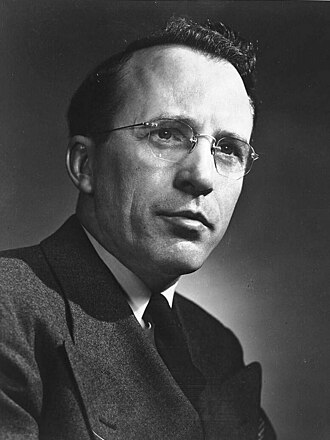
Tommy Douglas understood illness before he understood politics. As a child in Winnipeg, a serious leg infection—osteomyelitis—nearly led to amputation. His family, working-class immigrants from Scotland, could not afford the specialist care required to save the limb. A prominent surgeon, Dr. R.J. Smith, agreed to operate for free on the condition that his medical students could observe. The lesson stayed with him for a lifetime: a child’s health should not depend on their father’s bank account, but on the collective resources of a compassionate society. This singular event became the foundational logic for the most significant social reform in Canadian history.
Douglas became a Baptist minister, then a politician, then premier of Saskatchewan. From 1944 to 1961, his Co-operative Commonwealth Federation (CCF) government used provincial power to test a radical Canadian idea: public services could be built around collective dignity rather than individual charity. He believed that the "social gospel"—the application of Christian ethics to social problems—required more than just prayer; it required legislative action. His journey from the pulpit to the premier’s office was driven by a belief that a better world was not just possible, but a moral imperative.
The Social Gospel & Early Struggle
Born Thomas Clement Douglas on October 20, 1904, in Falkirk, Scotland, Tommy was the son of an iron molder and a devout mother. The family moved to Winnipeg in 1910, arriving just in time to witness the industrial and social tensions that would culminate in the 1919 Winnipeg General Strike. As a fifteen-year-old, Douglas watched from a rooftop as "Bloody Saturday" unfolded, seeing the violent suppression of workers fighting for a living wage. This exposure to the raw power of the state and the vulnerability of the working class deeply influenced his political awakening. He saw that without organization, the individual worker was powerless against the cathedrals of capital.
Douglas’s education at Brandon College was a period of intense intellectual and spiritual development. He was drawn to the Social Gospel movement, which argued that the church’s primary mission was to establish social justice on Earth. After being ordained as a Baptist minister in 1930, he took a charge in Weyburn, Saskatchewan, just as the Great Depression began to ravage the Prairies. He saw his parishioners losing their farms, their homes, and their hope. He often told the story of conducting funerals for people who had died of preventable illnesses simply because they couldn't afford a doctor. These "funerals of poverty" convinced him that the pulpit was not enough; to save his people, he had to change the laws of the land.
Premier of Saskatchewan (1944–1961)
In 1935, Douglas was elected to the House of Commons as one of the first CCF Members of Parliament. He quickly earned a reputation as a fierce orator and a master of the "Mouseland" allegory—a story about mice who kept electing cats and wondering why their lives were so difficult. In 1944, he returned to Saskatchewan to lead the provincial CCF to a landslide victory, forming the first social democratic government in North America. His mandate was clear: to build a province where no one was left behind. In his first year, his government passed over 100 bills, including the first Bill of Rights in Canada, which prohibited discrimination based on race, religion, or gender years before the federal government followed suit.
The "Saskatchewan Experiment" was a laboratory for social reform. Douglas’s government nationalized the power and telephone utilities, introduced the first government-funded automobile insurance, and created a provincial airline to serve remote northern communities. But his primary focus remained health. In 1947, he introduced the Hospital Insurance Act, which provided universal hospital care to every resident of Saskatchewan. It was a massive undertaking that required careful financial management—Douglas was famously fiscally conservative, believing that "you can't have a social program if you're broke." The success of the hospital plan proved that universal coverage was not only moral but economically viable.
The Medicare Battle of 1962
The final and most difficult step was universal medical insurance—coverage for doctors' visits as well as hospital stays. The conflict was fierce. When the Saskatchewan Medical Care Insurance Act was passed in 1961, it triggered a full-scale revolt from the medical establishment. The "Saskatchewan Doctors' Strike" of 1962 lasted 22 days, leaving the province in a state of crisis. Doctors feared that they would become "civil servants" and that the quality of care would diminish. Douglas, who had by then stepped down as premier to lead the federal NDP, watched as his successor, Woodrow Lloyd, held the line. The government brought in doctors from Great Britain and other provinces to maintain emergency services.
The strike eventually collapsed as public support for the government’s plan remained strong. The resulting "Saskatoon Agreement" preserved the principle of universal, public funding while allowing doctors to maintain their status as independent practitioners. This compromise became the blueprint for the national Medicare system. In 1966, the federal government under Lester B. Pearson passed the Medical Care Act, extending the Saskatchewan model to all Canadians. Douglas’s "provincial experiment" had become a national promise, a defining feature of the Canadian social contract that continues to provide a sense of security to millions.
Civil Liberties & The NDP
In 1961, the CCF merged with the Canadian Labour Congress to form the New Democratic Party (NDP), and Douglas was chosen as its first federal leader. He spent the next decade advocating for social justice on the national stage. One of his most courageous moments came during the 1970 October Crisis. When Prime Minister Pierre Trudeau invoked the War Measures Act, suspending civil liberties in response to the FLQ kidnappings, Douglas was one of the few voices in Parliament to oppose it. He warned that "using a sledgehammer to crack a peanut" would set a dangerous precedent for the erosion of fundamental rights. Though his stance was deeply unpopular at the time, history has largely vindicated his concern for the fragility of democracy.
Douglas’s leadership of the NDP was characterized by a refusal to compromise on core principles for the sake of political expediency. He believed that a third party’s role was to be the "conscience of the nation," pushing the larger parties toward progressive reform. He retired from the leadership in 1971 but remained an active and beloved figure in Canadian public life until his death in 1986. In 2004, a nationwide CBC poll voted him "The Greatest Canadian" of all time, a title that reflects the enduring impact of his work on the daily lives of almost every person in the country.
Tommy Douglas did not build Canadian health care alone. It was a massive collaborative effort of workers, voters, and leaders across the political spectrum. But Douglas gave the idea its political proof. Saskatchewan showed that public health insurance was not a fantasy; it could be administered, defended, and expanded for the good of all. He taught a nation that the measure of a society is not its wealth, but how it treats its most vulnerable members. His legacy is found in every hospital waiting room and every doctor’s office where a health card, not a credit card, is the only thing required for care.
Notable Quotes
"I came to believe that health services ought not to have a price tag on them, and that people should be able to get whatever health services they required irrespective of their individual capacity to pay."
— Tommy Douglas
"Courage, my friends; 'tis not too late to build a better world."
— Tommy Douglas
"The only test of our character that matters is how we look after the least fortunate among us."
— Tommy Douglas
"If we can spend billions on the machinery of war, we can surely find the resources for the machinery of compassion."
— Tommy Douglas
Operational Timeline
Origin
Born in Falkirk, Scotland. The family immigrates to Winnipeg in 1910.
Winnipeg Strike
Witnesses "Bloody Saturday," an event that solidifies his commitment to labor and justice.
Ordination
Ordained as a Baptist minister in Weyburn, SK, during the height of the Great Depression.
Federal MP
Elected to the House of Commons as a member of the Co-operative Commonwealth Federation (CCF).
Premier of Saskatchewan
Leads the CCF to victory, forming the first social democratic government in North America.
Hospital Insurance
Introduces the first universal hospital insurance plan in Canada.
NDP Leadership
Leaves provincial politics to become the first federal leader of the New Democratic Party.
Medicare Victory
Full medical insurance is launched in Saskatchewan after a bitter 22-day doctors' strike.
War Measures Act
One of the few MPs to oppose the invocation of the War Measures Act during the October Crisis.
Order of Canada
Invested as a Companion of the Order of Canada for his service to the nation.
Final Departure
Tommy Douglas passes away in Ottawa at the age of 81. A nation mourns its most significant reformer.
The Greatest Canadian
Voted "The Greatest Canadian" by a nationwide CBC poll, reflecting his enduring impact on national identity.