Technical Portrait 053
Ursula Franklin
The scientist who insisted that technology is a social choice, not just a tool.
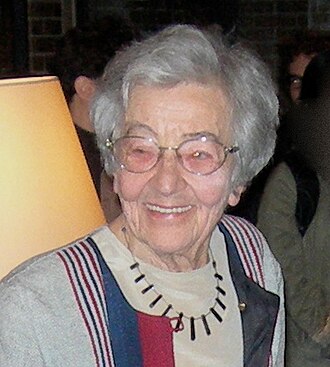
Ursula Franklin belongs in the Supers collection because she taught Canada to think about technology as a social system. A physicist, metallurgist, educator, feminist, Quaker, and peace advocate, Franklin refused to treat science as separate from ethics. Her work asked a question that has only become more urgent: who does technology serve, and what kinds of power does it quietly organize?
She matters because she connected laboratory seriousness with civic imagination. Franklin could speak as a scientist without surrendering to the myth that technical expertise is neutral. Her public work gave Canadians tools for questioning systems that appear efficient while narrowing human freedom.
The Canadian Identity
Franklin's Canadian identity was shaped by exile, survival, and intellectual service. Born in Germany, she survived the Nazi era and came to Canada after the Second World War. At the University of Toronto she became a major scientific and public figure, combining European memory, Canadian institution-building, and a deep commitment to peace.
Her adopted Canada was not simply a safe destination. It became the place where she built a career devoted to public responsibility. That gives her story a particular moral shape: Canada as refuge, workplace, classroom, and platform for conscience.
The Achievement
Her scientific work in metallurgy and materials research was significant, including work connected to archaeometry and the study of materials across time. But her broader achievement may be the clarity of her public thinking. In The Real World of Technology, her Massey Lectures, she described technology not just as machines but as practices, systems, and social arrangements.
That framework remains powerful in an age of platforms, automation, surveillance, and artificial intelligence. Franklin warned that technologies carry models of control. She urged citizens to notice whether systems are holistic or prescriptive, whether they support human agency or reduce people to functions.
The Legacy
Franklin's legacy lives in science, feminism, peace activism, education, and technology criticism. She showed that a scientist can be rigorous without being narrow and moral without being vague. Her life offers a model of intellectual citizenship: learn deeply, speak plainly, and ask what kind of society our tools are building.
For the Supers collection, Franklin is a quiet-force figure. Her power is not celebrity. It is the ability to give people language for pressures they already feel but cannot yet name.
Operational Timeline
Born in Munich
Born in Munich, Germany, into a Europe whose violence would deeply shape her later commitments to peace and responsibility.
Survives Nazi persecution and studies science
Survives Nazi persecution and studies science, carrying personal history into a career of public ethics and research.
Comes to Canada and begins building a scientific career that will become closely...
Comes to Canada and begins building a scientific career that will become closely tied to the University of Toronto.
Becomes the first woman professor in the University of Toronto's Faculty of Applied...
Becomes the first woman professor in the University of Toronto's Faculty of Applied Science and Engineering.
Delivers the CBC Massey Lectures later published as The Real World of Technology
Delivers the CBC Massey Lectures later published as The Real World of Technology.
Continues as a leading peace
Continues as a leading peace, feminist, and public-interest voice on science and technology.
Dies in Toronto
Dies in Toronto, leaving a body of thought that remains highly relevant to modern technological society.