Civil Rights 007
Viola Desmond
Entrepreneur. Mentor. The woman whose quiet refusal in a Nova Scotia theatre forced a nation to confront its conscience.
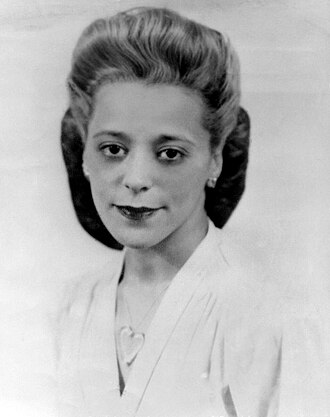
Viola Desmond was not looking for a monument; she was a woman of vision, enterprise, and an unwavering sense of dignity. A trailblazing Black Canadian businesswoman on a routine trip to Sydney, Nova Scotia, her life took a historic turn when a mechanical failure forced her into a confrontation that would challenge the nation's conscience. When her car broke down in New Glasgow on November 8, 1946, she bought a ticket to a movie to pass the time, unaware that her quiet refusal to accept second-class treatment would ignite a movement for civil rights in Canada.
Early Life: A Foundation of Excellence
Born Viola Irene Davis on July 6, 1914, in Halifax, Nova Scotia, she was one of fifteen children in a hardworking and respected family. Her father, James Albert Davis, had worked as a stevedore and a barber, while her mother, Gwendolyn Irene Davis, was the daughter of a white minister from New Haven, Connecticut. Growing up in a large, integrated family, Viola was instilled with a strong sense of community and the belief that education and professional success were the keys to overcoming the racial barriers of the era.
From a young age, Viola noticed the lack of professional beauty products and services specifically designed for Black women in Halifax. While many young women of her generation were pushed toward domestic work, Viola had higher ambitions. She wanted to become a beautician and an entrepreneur, not just for her own success, but to provide opportunities and dignity for other Black women in her community. However, she quickly encountered the systemic racism that defined the 1930s; local beauty schools in Nova Scotia refused to admit Black students, forcing her to look far beyond her home province for training.
The Entrepreneurial Journey
Undeterred by local prejudice, Viola traveled to Montreal, New York City, and Atlantic City to receive the professional training she desired. She studied at the prestigious Apex College of Beauty Culture and Hairdressing in New York, a school founded by Madam C.J. Walker’s contemporaries, where she mastered the art of hair and skin care for Black clientele. Upon her return to Halifax, she opened Vi's Studio of Beauty Culture on Gottingen Street, which quickly became a thriving social and professional hub for the Black community.
Her vision extended far beyond a single salon. Recognizing that other Black women faced the same educational barriers she had, she founded the Desmond School of Beauty Culture. Each year, she trained approximately fifteen women from across the Maritimes and Quebec, providing them with the skills to open their own businesses and gain financial independence. Simultaneously, she launched "Vi's Beauty Products," her own line of cosmetics and hair treatments tailored for Black skin and hair. By 1946, Viola Desmond was a highly successful, independent businesswoman, traveling across Nova Scotia to market her products and support her students.
The Roseland Incident
On that fateful evening in November 1946, Viola’s car broke down in New Glasgow, a town known for its rigid, though often unofficial, segregation. While waiting for repairs, she went to the Roseland Theatre. She requested a ticket for the main floor, but the cashier handed her a balcony ticket. When Viola tried to enter the main floor, the ticket taker told her, "You can't sit here; you have a balcony ticket." Realizing she had been sold the wrong ticket because of her race, she returned to the booth to pay the one-cent difference in tax. The cashier refused, stating, "I'm not permitted to sell down-stairs tickets to you people."
Quietly but firmly, Viola walked back into the theatre and took a seat on the main floor. She was nearsighted and simply wanted to see the screen clearly, but her presence was a direct challenge to the theatre’s discriminatory policy. The manager eventually called the police. Viola was forcibly dragged out of the theatre, injuring her hip and knee, and was thrown into a jail cell for the night. She sat upright in her cell all night, wearing her white gloves—a symbol of her dignity and poise even in the face of brutal injustice.
The Legal Battle and Moral Victory
The following morning, Viola was charged with tax evasion. The province argued she had defrauded the government of the one-cent difference in amusement tax between the balcony and the floor. It was a transparently racist legal maneuver designed to uphold segregation without admitting it existed. She was fined $20 and court costs. Upon her return to Halifax, she was encouraged by her husband, Jack Desmond, and the community to fight the conviction.
Supported by the Nova Scotia Association for the Advancement of Coloured People (NSAACP) and Carrie Best, founder of the Black newspaper *The Clarion*, Viola took her case to the Supreme Court of Nova Scotia. Though she ultimately lost her legal appeals on technical grounds, the case became a landmark in the fight for racial equality in Canada. Her courage forced a public conversation about segregation that could no longer be ignored, directly contributing to the eventual dismantling of Nova Scotia’s discriminatory laws in 1954.
Legacy: A Permanent Correction
The personal toll of the legal battle was heavy. Viola eventually moved to Montreal and then to New York City, where she passed away in 1965 at the age of 50. For decades, her story was largely forgotten by the broader public, kept alive only within the Black community. It was the tireless advocacy of her sister, Wanda Robson, that finally brought Viola’s heroism to national prominence in the 21st century.
In 2010, the Government of Nova Scotia granted Viola a posthumous free pardon—the first of its kind in Canadian history—explicitly acknowledging that her conviction was a miscarriage of justice. In 2018, she was chosen to be the first Canadian-born woman to be featured alone on a regularly circulating banknote, the vertical $10 bill. Today, her portrait travels through the hands of millions of Canadians every day, serving as a constant, vertical reminder that one person’s refusal to be small can change the course of a nation’s history.
Notable Quotes
"I just wanted to see the movie like everyone else. I didn't think I was asking for the world, just a seat where I could see."
"I believe that if you provide women with the tools to be independent, you change the entire community."
"It was not about the one cent. It was about the principle of being able to go where I chose to go."
Justice Timeline
Birth
Born Viola Davis in Halifax, Nova Scotia, to a prominent family.
Beauty Training
Travels to Montreal and NYC for training after being barred from Nova Scotia schools.
Vi's Studio Opens
Establishes her salon on Gottingen Street in Halifax.
Desmond School
Founding of the Desmond School of Beauty Culture to train Black women.
The Refusal
Arrested at the Roseland Theatre in New Glasgow for sitting in the "Whites-only" section.
Supreme Court Appeal
Loses her appeal at the Nova Scotia Supreme Court, a major legal setback but a moral victory.
Desegregation
Nova Scotia officially ends legal segregation in theatres and public places.
Passing
Dies in New York City at age 50; her legacy remains largely quiet for several decades.
Free Pardon
The Lieutenant-Governor of Nova Scotia grants the first posthumous free pardon in Canadian history.
Banknote Selection
Selected by the Bank of Canada to be the face of the new $10 bill.
The $10 Bill
The vertical $10 bill enters circulation, honoring her role in the civil rights movement.
Historic Designation
Canada Post and Parks Canada further recognize her as a person of national historic significance.