Technical Portrait 034
Wilder Penfield
The surgeon who made Montreal one of the world capitals of brain science.
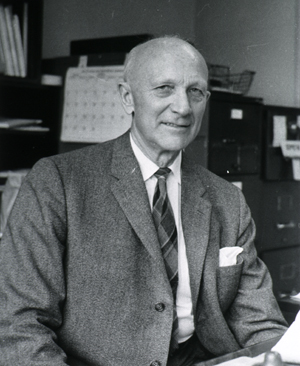
Wilder Penfield made the brain a map without making it smaller than its mystery. At McGill and the Montreal Neurological Institute, he developed surgical approaches that helped people with severe epilepsy while also revealing how sensation, movement, memory, and language are organized in the cortex.
The Canadian Identity
The Canadian identity of Penfield is institutional. He was born in the United States, but his mature work belongs to Montreal. He accepted an invitation to McGill, helped found the Montreal Neurological Institute in 1934, and built a clinical research culture where surgery, observation, and neuroscience reinforced one another.
The Achievement
Penfield's famous cortical homunculus is more than an image in textbooks. It represents a method: careful stimulation of the brain during surgery, attention to what patients reported, and a willingness to connect clinical care to basic understanding. His epilepsy surgery program gave patients new possibilities while making Canada central to twentieth-century neurology.
The Legacy
His legacy also carries a public dimension. Penfield became one of the rare physicians whose work entered Canadian popular memory, helped by the famous Heritage Minute about burnt toast. The deeper story is even stronger: a Canadian medical institution built around disciplined curiosity, humane care, and international excellence.
Operational Timeline
Born in Spokane, Washington
Born in Spokane, Washington.
Moves to Montreal to work at McGill
Moves to Montreal to work at McGill.
Founds the Montreal Neurological Institute with William Cone
Founds the Montreal Neurological Institute with William Cone.
Cortical mapping work becomes central to modern neuroscience
Cortical mapping work becomes central to modern neuroscience.
Dies in Montreal
Dies in Montreal.
Inducted into the Canadian Medical Hall of Fame
Inducted into the Canadian Medical Hall of Fame.